The 7% Mortgage Rate: A New Reality for Homebuyers
Mortgage rates have soared past 7% for 30-year fixed loans, signaling a tighter housing market where affordability is paramount and strategic borrowing decisions are crucial.
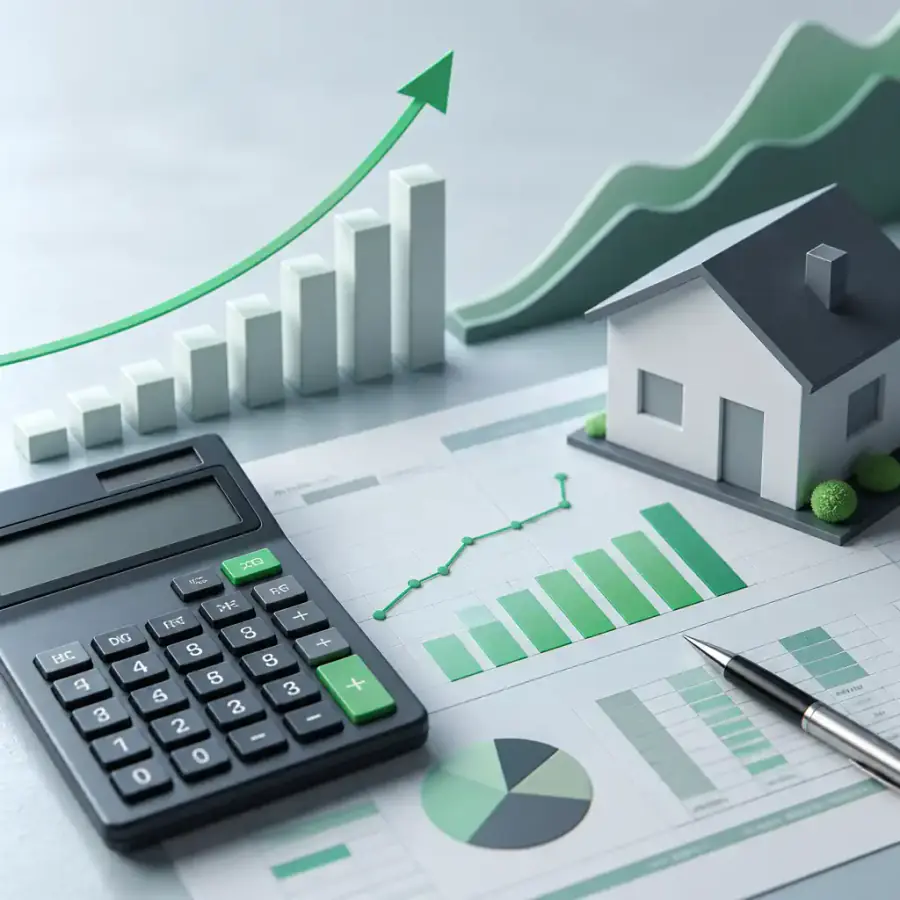
AI-generated image
Is the era of sub-7% mortgage rates truly behind us? For prospective homebuyers, the answer, at least for now, appears to be a resounding yes. The housing market is navigating a challenging landscape, with mortgage rates continuing their upward climb, presenting a new reality for affordability and borrowing strategies.
Today, Sunday, October 4, 2026, mortgage rates are generally higher than they were just last week, as reported by Yahoo Finance. This follows a significant trend observed in early October, with the national average on a 30-year fixed-rate mortgage hitting 7.43% on October 1, 2026, according to Bankrate and Fortune. Other reports indicated the 30-year average climbed to 7.28%, marking its highest level since November 2023, and representing its sixth consecutive weekly increase, a move described by Reuters as the largest jump in four years. These figures clearly illustrate that the market has tightened considerably, moving well past the roughly 6.96% seen in March 2026.
The Steep Cost of Borrowing
The most immediate impact of these escalating rates is the significant increase in borrowing costs. A 30-year fixed-rate loan at 7.43% demands a substantially higher monthly payment compared to the 6.34% average from just a year ago, as noted by The New York Times. This surge makes homeownership less accessible for many, squeezing budgets and potentially pushing first-time buyers out of the market. For those who can still afford to buy, the higher rates necessitate a recalibration of expectations regarding home price points and mortgage size.
In response to these elevated fixed rates, we are observing a growing trend of homebuyers exploring alternative, often riskier, financing options. Adjustable-rate mortgages (ARMs), for instance, might offer lower initial payments, but they come with the inherent uncertainty of future rate adjustments. While they can provide a temporary reprieve, borrowers must carefully weigh the potential for increased payments down the line, especially in an environment where interest rates are generally trending upwards.
Central Banks at the Helm: The Inflation Fight Continues
The primary driver behind these rising mortgage rates appears to be the ongoing efforts of central banks, particularly the Federal Reserve, to combat inflation. The Fed's decision to raise interest rates to a range of 3.75%-4.00% on September 16, 2026, as reported by Citizens Bank, has a direct ripple effect on mortgage rates. When the central bank increases its benchmark rate, it makes borrowing more expensive across the economy, including for mortgage lenders.
This isn't an isolated phenomenon; markets are also pricing in higher interest rates in other major economies, such as the UK, before the end of 2026, according to Morningstar. This global alignment in monetary policy suggests a concerted effort to cool inflationary pressures, which, while necessary for economic stability, inevitably translates to higher costs for consumers and businesses alike. As long as inflation remains a concern, we expect central banks to maintain their hawkish stance, keeping upward pressure on interest rates.
A Shifting Housing Market Dynamic
The impact of rising mortgage rates extends beyond individual borrowers to reshape the broader housing market. While higher rates undeniably dampen demand by making homes less affordable, they can also lead to an increase in available inventory, as seen in some local markets like Madison County, Alabama, where homebuyers now have more options despite rising rates, according to the Huntsville Business Journal.
Forecasts suggest that home prices will continue to rise, albeit at a more subdued pace. Fannie Mae anticipates a 2.3% increase in 2026, while the Mortgage Bankers Association (MBA) projects a more modest 0.8% rise for the same year, as cited by U.S. News. This combination of higher borrowing costs and potentially more inventory, alongside slower price appreciation, creates a more balanced, albeit challenging, market for both buyers and sellers. The frenetic pace of recent years appears to be yielding to a more considered, and costly, buying process.
In our view, the current high mortgage rates are not merely a temporary blip but rather indicative of a more sustained period of higher borrowing costs. Homebuyers should adjust their expectations accordingly, focusing on financial planning and understanding the long-term implications of their mortgage choices. For the housing market as a whole, this signals a transition from an era of ultra-low rates to one where fiscal discipline and strategic planning will be paramount.
No topics yet: start the first one.
More stories
Inherited Homes: Spain's Unused Key to an Unaffordable Housing Market?
As Spain's housing transactions decline while prices soar, a government proposal to convert inherited properties into affordable units could offer a critical, albeit challenging, pathway to market stability.
French Furnished Rentals: Why New Taxes Will Reshape the Market
France's proposed 2027 fiscal reforms for furnished rental properties are set to significantly increase the tax burden on owners, potentially reshaping the entire housing market.
Europe's Housing Market: The Affordability Divide Deepens
Across Europe, a persistent lack of supply, rising prices, and stricter mortgage conditions are creating a challenging environment for aspiring homeowners, deepening the divide between those who own and those who hope to.