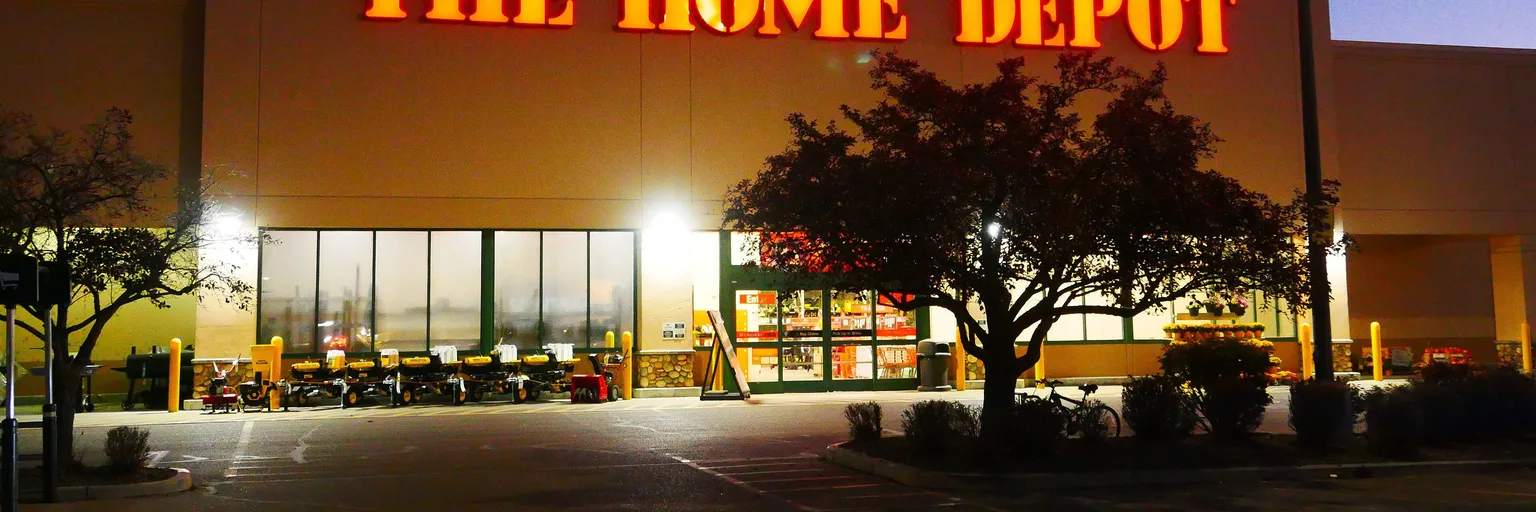
Home Depot's new CEO and earnings beat aren't the story. The housing freeze is
A smooth CEO handoff and a small earnings beat look reassuring, but Home Depot's fate still hangs on a frozen housing market, not on who sits in the corner office.

Visa and Mastercard's proposed settlement trims what merchants pay on paper, but the toll booth stays open, and shoppers shouldn't count on lower prices at the register.
A nationwide ground stop blamed on a network update shows that aging infrastructure is an economic risk, and someone will pay the $50 billion Washington says it needs.
Higher rates raise lease costs for every brand, and a captive bank like Renault's softens the hit. US subprime car credit shows how thin household cushions are.
The Paris court ruling on Monday is about more than a landmark: BHV and its landlord Brookfield dispute who pays for shrinking a big-city department store.
A multibillion third-quarter loss, restructuring charges and a collapse in China deliveries should make investors doubt the "cheap stock with a dividend" story.
A new China chief and a market in free fall show German premium carmakers are now defending, not growing. Investors should price in thinner margins, not a quick rebound.
A 20% jump in profit looks like a bank firing on all cylinders, but a one-time gain from selling Poland inflates it. Ordinary profit tells the truer story.
With 50.08% secured and no higher price on offer, minority shareholders get less takeover upside and more governance risk. Judge the stock on cash flow.
Audi's first U.S. factory was announced on a Trump campaign stage, years before it builds a car. We think investors should read it as defensive spending, not expansion.
Schneider fell sharply after announcing its biggest-ever acquisition. Investors aren't rejecting the strategy; they're demanding that synergies and cash flow prove it.
Rheinmetall's Spanish expansion shows rearmament turning into local factory deals, but investors should weigh margins, court risk and politics before buying the story.
American's CFO says fares could stay put even if fuel drops, and carriers are happy to fly emptier planes. Travelers should budget for it; investors should doubt it.
Talks to merge Smith & Nephew with J&J's orthopaedics unit reportedly died over who would run the company. Investors should treat even advanced deal talks as options.
Hiring 1,000 contractors to fix flaws an AI model exposed suggests vulnerability discovery is becoming a recurring bank cost. Investors should ask who budgets for it.
Roland Busch is betting Siemens can become faster and more digital, but the real test is whether software and infrastructure growth improve returns and cash generation.
Brussels is not merely testing Booking’s compliance: it is asking who should pay when a trusted marketplace turns fake listings and phishing into platform-wide risk.
Anthropic’s proactive agent is less a feature launch than a business experiment: will people pay every month for useful delegation despite errors, limits and privacy trade-offs?
Meta’s earnings show a powerful advertising engine, but its AI buildout must generate durable cash flow before litigation makes the platform’s economics harder to defend.
EA’s reported BioWare retrenchment reflects a harsher industry logic: publishers are protecting franchises and margins, but may be cutting the talent that creates the next hit.