Nvidia's record quarter was the price of admission, not a victory lap
A quarter that more than doubled revenue arrived after four straight down days for U.S. stocks. The real question is how much AI-chip risk sits in your own portfolio.

Central banks are flagging AI valuation risk the week Nvidia reports. The sensible reading is to look at how much of your portfolio rides on one theme, not to dump it all.
Trump blames Democrats for a roughly $3 trillion sell-off, but the evidence points to AI worries and weak chip forecasts. Investors should check their risk, not pick a team.
Elon Musk expects a shakeout among AI cloud providers in 2027. Whether or not a crash follows, the useful question is how much of your portfolio rests on borrowed money.
Huang's exit and HSBC's cut to Hold turn Tuesday's report into a test of key-person risk, and index investors should check their exposure now.
At $70-$78 a share, Anthropic's debut prices in flawless growth, huge compute bills and benign markets. Size any position as a bet on the price, not a lottery ticket.
The Nasdaq jumped nearly 3% while Nvidia sank 4% on the Jensen Huang probe. Leadership may be spreading, but chasing the bounce is the wrong lesson.
Wall Street clawed back a huge slice of last week's AI rout in one session, yet Nvidia's Huang probe shows how much index portfolios lean on a single person.
A one-day chip rout erased the post-election rally, and the lesson isn't about Democrats or Republicans: it's about how much of your portfolio rides on one AI trade.
The AI selloff is really about cash burn, not central banks, but companies that borrow to keep building are the most exposed if money gets pricier. Stress-test your portfolio.
Monday's open will likely be loud, but the useful question is whether AI spending can pay for itself. Free cash flow, not the headline index move, is what to watch this week.

The day AI capex flattens is the real test for stocks. In our view, the defensive rotation already under way is less independent of AI than it looks.
Seasonal patterns say the best stretch for stocks starts now. But base rates ignore concentration, valuation and today's yields, and steady contributions beat guessing the bounce.
Big Tech is returning the smallest share of its cash in at least 15 years because AI capex eats it first. Investors should watch growth and free cash flow, not payout habits.
When the Nasdaq slips, the most hyped AI names must lower their asking price. Retail investors should read that as a caution about IPOs and private marks, not as an invitation.
OpenAI is reportedly seeking $20 billion instead of $30 billion at a lower valuation. It's no collapse, but it's a reminder that private AI marks are negotiated prices, not facts.
Tech fell, Treasuries rallied and oil hit six-month highs on the same day. The market is pricing AI cash burn, not just rates, so check what your bonds really do for you.
Intel beat on profit and still suffered its worst day in decades, while Amazon missed. The lesson for index-fund owners is how much one AI narrative is carrying.
Wall Street didn't reject AI this week. It rejected spending that arrives long before the profits do, and index-fund holders are more exposed to that than they think.
Amazon, Intel and Alphabet shook the Nasdaq while most S&P 500 sectors held up, so the real question is not whether AI is a bubble but how much of your portfolio rides on one trade.
AWS grew 39% and sales rose 12%, yet shares sank: the market now wants proof that heavy AI capex turns into cash, and index investors should notice.
US growth hit 3.4% while the Fed's favorite inflation gauge accelerated. The debate has moved past when cuts come to whether another hike is needed.
A cloud business that doubled couldn't save Alphabet's stock from a search miss and negative free cash flow. Investors have stopped funding AI capex on faith.
The STAR50 rout shows how fast an AI premium can evaporate when expectations outrun profits. The real question is how much of your portfolio rides on the same story.
Oracle rose about 11% on a fiscal 2030 revenue goal, while Alphabet fell 8% after hours on a tiny miss. Investors are paying for distant AI numbers; watch the funding plan.
Banks and Blackstone are financing chips that Anthropic will lease, and the real question is who eats the loss if the hardware ages faster than the loans.
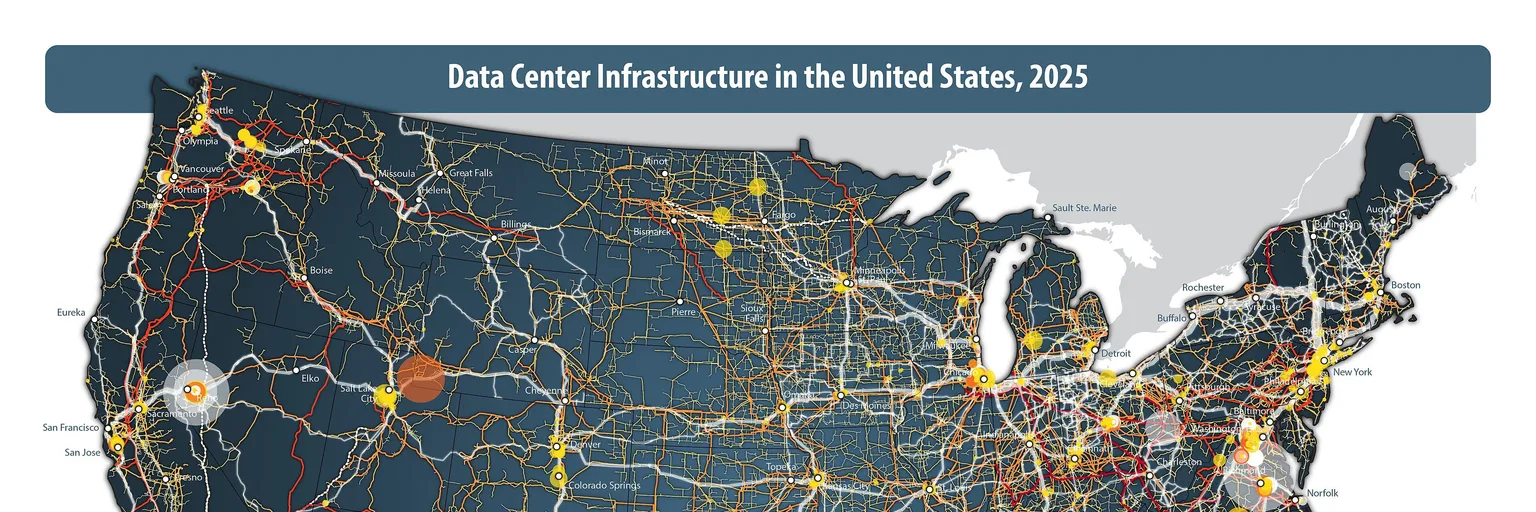
Vertiv's 61% sales growth and GE Vernova's near-$200 billion backlog suggest AI spending is flowing to power and cooling suppliers, but position size matters more than the story.
Anthropic's S-1 arrived as stocks rose, but a cash-hungry AI lab going public is a chance to price AI with real numbers, not a reason to rush in.
When the man who just borrowed $40 billion for chips says 200+ neoclouds face "guppy-level death," believe the debt math, not the drama. Cash flow beats leverage.
Stocks keep hitting records while GDP and jobs data stop explaining why. Earnings concentration and valuation are better guides for your portfolio now.
Schneider fell sharply after announcing its biggest-ever acquisition. Investors aren't rejecting the strategy; they're demanding that synergies and cash flow prove it.
Jensen Huang's pitch to treat GPUs as collateral says demand isn't the problem, money is. But silicon wears out faster than houses, and lenders know it.
Index funds still work, but the top 10 stocks now carry roughly 40% of the S&P 500. Check your exposure before you assume you're diversified.
A 26% revenue jump wasn't enough. With capex at $34.9 billion and free cash flow negative, investors are asking AI spenders for proof of returns.
US banks are shutting out unvetted AI agents like Meta's Muse, citing liability above all. Until it's clear who pays when one goes wrong, keep your credentials to yourself.
Meta beat on revenue and still saw its stock sold off. With free cash flow negative, investors look to be treating AI capex as a cost that has to earn its keep.
Hiring 1,000 contractors to fix flaws an AI model exposed suggests vulnerability discovery is becoming a recurring bank cost. Investors should ask who budgets for it.
Thursday's sell-off paired a jump in crude with fresh AI spending jitters. Both hit the same crowded tech trade, so check your concentration before trying to time any dip.
Anthropic’s proactive agent is less a feature launch than a business experiment: will people pay every month for useful delegation despite errors, limits and privacy trade-offs?
Meta’s earnings show a powerful advertising engine, but its AI buildout must generate durable cash flow before litigation makes the platform’s economics harder to defend.