Musk's AI bankruptcy warning is a prompt to audit your portfolio
Elon Musk expects a shakeout among AI cloud providers in 2027. Whether or not a crash follows, the useful question is how much of your portfolio rests on borrowed money.
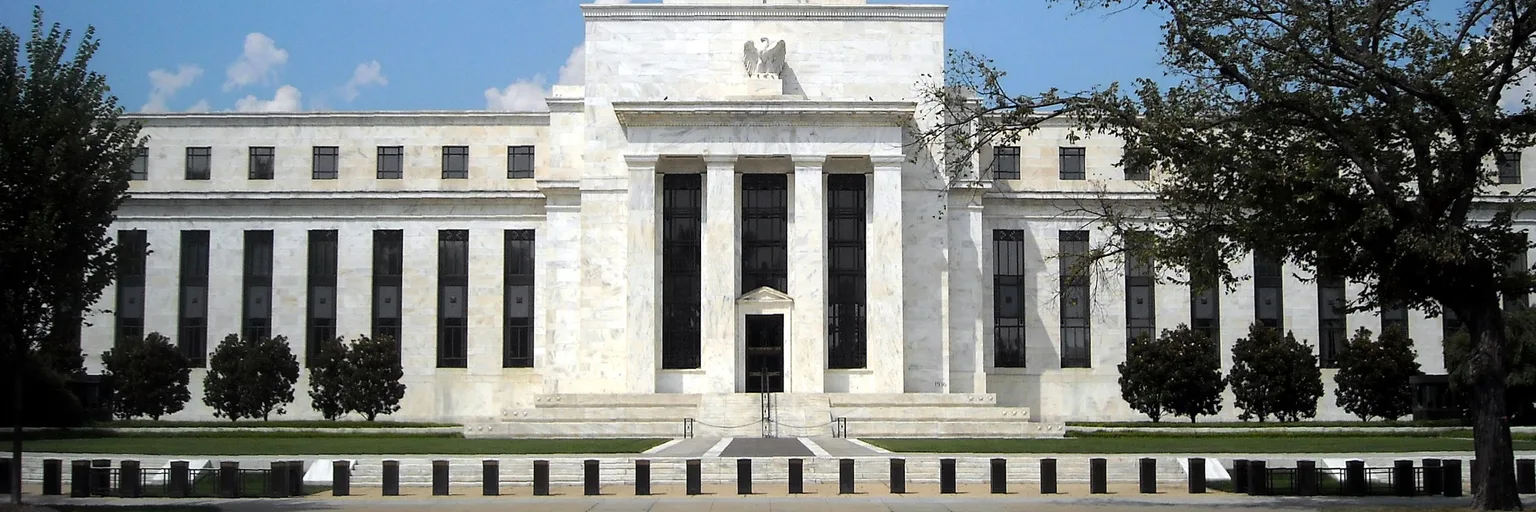
Photo: DOE / National Renewable Energy Laboratory (NREL) / Wikimedia Commons (Public domain)
Every few months a famous billionaire predicts a crash, and every few months investors are tempted to treat it like a weather forecast. Elon Musk's latest warning deserves better than that. It is not a date to circle on the calendar. It is a prompt to check what your portfolio is quietly betting on.
The facts are thin, so we'll keep them short. According to German financial outlets such as finanzen.ch, Musk expects 2027 to be a turbulent year for AI infrastructure, with a die-off among the specialized cloud providers known as neoclouds. Other coverage frames his point as a financing problem: raising capital for AI data centers is getting harder. The open question is whether that spills into the wider market, given how few giant companies shape the S&P 500.
The warning is about credit, not about AI
Notice what Musk is not saying, at least in the material we have. He isn't arguing that AI doesn't work or that demand is a mirage. The worry is about who can keep paying for the buildout. That is a very different claim, and in our view a more credible one. Booms rarely die because the technology disappoints. They die when the money that funds them gets more expensive or simply stops showing up. One outlet, ainvest, describes the warning as a call about the credit cycle. We can't verify that reading, but it fits the logic.
It also helps to remember that Musk is no neutral bystander. He heads Tesla and SpaceX, and he has business interests of his own in how this story plays out. That doesn't make him wrong. It means his words are an opinion from an interested party, not a measurement.
The stress test is already running
You don't need to wait until 2027 to see how nervous this market is. Reuters reported on November 12, as relayed by The Zimbabwe Mail, that Nvidia's shares had fallen more than 30% from their October record. The pressure came from leadership turmoil after Jensen Huang's resignation and from questions about the future pace of AI capital spending. Notice the second driver. Even a major beneficiary of the spending cycle is being priced on whether that spending lasts.
The same article makes a point we think is the most useful one for ordinary investors. A company can keep generating strong revenue while its stock falls, because buyers simply demand a lower valuation. Strong fundamentals and a rising share price are different things. The article also notes that if investors start doubting the sustainability of AI infrastructure spending, the consequences could extend to chipmakers, data-center operators and cloud providers. If neoclouds do start failing, we would expect that kind of doubt to spread.
Other warnings are circulating too. Some outlets cite an OECD worst-case scenario and a London strategist predicting the worst crash since the global financial crisis. We would treat those as what they are: scenarios and forecasts, not events. A crash forecast with a year attached sells headlines. It has a poor track record of helping people make money.
Size your positions instead of timing the crash
So what should a reader actually do? Not sell everything in a panic, and not shrug and keep buying the same five stocks. The honest answer is dull. Look at how much of your money depends on the AI trade, directly or through an index fund that is heavily weighted toward a handful of tech names. Many people holding a "diversified" fund own far more AI exposure than they realize.
Then ask which parts of that exposure depend on cheap borrowing. A profitable giant funding its data centers from cash flow is a different risk from a young provider that needs the next financing round. Keep the weight of any single theme at a level where a 30% drop would hurt but not change your life. Rebalance on a schedule, not on a headline. And if your time horizon is short, for retirement soon or a house deposit, the case for holding less risk doesn't need Musk to justify it.
Our verdict: take the warning seriously, but the date lightly. Nobody, including Musk, can tell you whether 2027 brings a crash, a correction or a boring year. What you can control is concentration and leverage. If your portfolio only works when AI financing stays easy, that's a design flaw worth fixing today, whatever happens next. This is general analysis, not personalized investment advice.
No topics yet: start the first one.
More stories
The $3 trillion stock drop isn't a verdict on any party
Trump blames Democrats for a roughly $3 trillion sell-off, but the evidence points to AI worries and weak chip forecasts. Investors should check their risk, not pick a team.
Corporate bonds are a fine refuge from stocks, if you stop calling them one
After a near-$3 trillion stock sell-off, investors are eyeing US corporate bonds; the smart move is to treat credit as an income sleeve, not a Treasury-style hiding place.
Nvidia's real risk isn't earnings: it's one man's absence
Huang's exit and HSBC's cut to Hold turn Tuesday's report into a test of key-person risk, and index investors should check their exposure now.

Goldman's third Fed hike call says the plateau is far away
Goldman now sees a third hike in March 2027 and no cut until December 2027. Whatever the Fed does next, investors should plan for a long stretch of high rates, not a quick pivot.