Hands off the ECB: politicized money is a tax on savers
Pressure on the ECB may sound like cheap financing for governments, but we think the bill lands on savers and borrowers through a higher price for inflation risk.
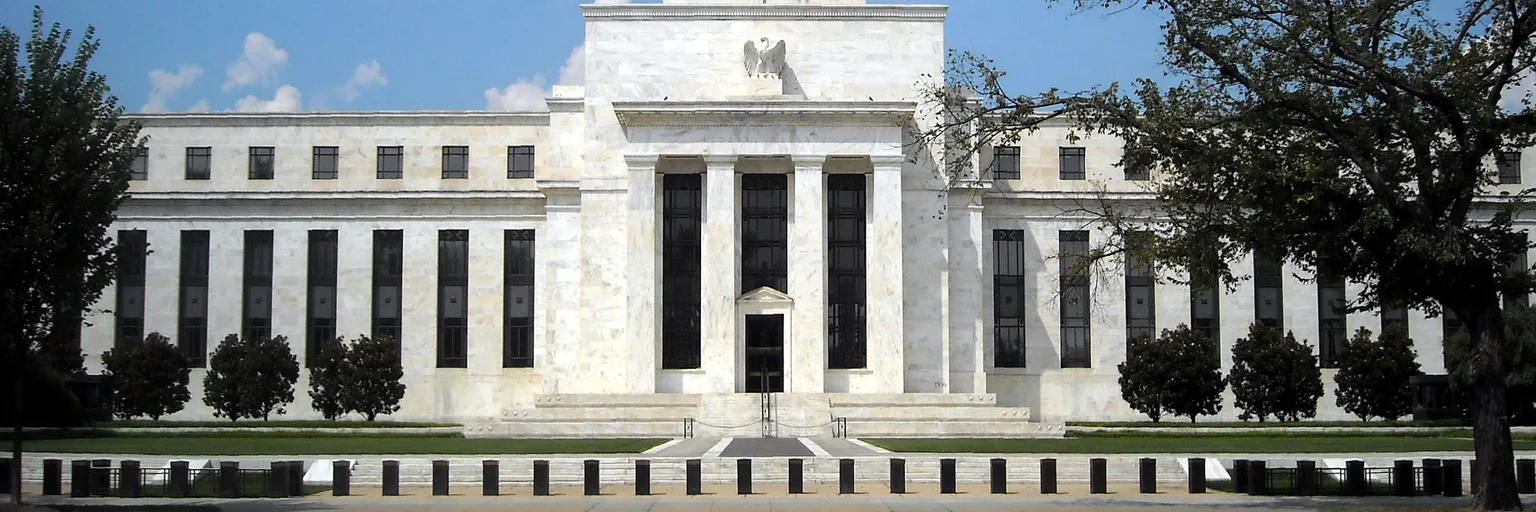
Photo: DXR / Wikimedia Commons (CC BY-SA 4.0)
Who would object to cheaper government borrowing? That is the pitch behind every attempt to bend a central bank to political will, and it is why the pitch works. In our view it is also one of the most expensive free lunches in economics, and ordinary savers eventually pick up the check.
The latest prompt is a guest commentary in Handelsblatt. As Handelsblatt published, DIW head Marcel Fratzscher argues that the talks among governments over a successor to ECB President Christine Lagarde are about far more than a personnel decision: the ECB's independence is at stake. He points to Marine Le Pen's stated wish to have the ECB buy French and other government bonds, and to Jean-Luc Mélenchon's idea of cancelling French public debt held at the Banque de France. He also cites the pressure Donald Trump puts on the US central bank and on Kevin Warsh to cut rates. Finanznachrichten summarizes his remedy: responsible fiscal policy, plus better communication and accountability from the central bank itself.
Cheap money is a loan against your purchasing power
Fratzscher's description of the appeal is revealing. Lower rates give a short-term economic boost and improve the chances of re-election. That is the whole logic: the benefit arrives before the vote, and the cost arrives after it.
From here on, this is our own reading rather than Fratzscher's. A central bank that is believed to follow a political calendar cannot credibly promise to keep inflation in check. Investors who doubt that promise ask for compensation, which shows up as higher yields on long-term bonds. That compensation is the inflation risk premium. It does not stay in bond markets. Borrowing costs across the economy tend to follow government yields, so mortgage holders and companies would likely face higher rates, not lower ones. Governments that wanted cheaper financing could end up with a pricier one.
Savers are caught on both sides. If inflation does rise, the real value of deposits and fixed-income holdings shrinks. If markets demand higher yields, existing bonds lose value. We can't put a number on any of this, and Fratzscher's column doesn't either. But the direction seems clear to us.
The French example shows why this isn't abstract
It would be comfortable to treat this as a distant American habit. Fratzscher's examples say otherwise: they come from two opposite ends of French politics. Different ideologies, the same instinct, which is to see the central bank balance sheet as a fiscal resource.
We would add a note of caution. These are statements by politicians, not policies, and Fratzscher's piece is an opinion column, not a market study. Whether any of it happens is unknowable today. Still, markets price expectations, not just decisions, and a credible threat can matter before anything is signed.
The ECB can't just say "trust us"
The most interesting part of Fratzscher's prescription is the bit that is aimed at the ECB itself: better communication and accountability. In our view, independence is not a divine right, and it survives only if the public understands what the bank does and can see it answer for its results. A central bank that explains itself poorly leaves a vacuum, and populists are happy to fill it.
The calendar gives the ECB chances to do exactly that. According to wallstreet-online's calendar, the ECB publishes its Financial Stability Report on November 18, and Lagarde speaks at the European Banking Congress in Frankfurt on November 20. We would watch less for rate hints than for how firmly and plainly they defend the institution's mandate.
Savers should treat ECB independence as a household asset
Savers and mortgage holders should not cheer for easier money from a political hand. The sensible stance is to treat the independence of the ECB as a household asset, as real as a deposit account, even though it does not appear on any statement. For the successor talks, the test is simple: whoever gets the job must be seen to answer to the mandate, not to the next election. This is analysis, not investment advice, and rules and products differ by country. But on the principle we are clear: hands off.
No topics yet: start the first one.
More stories
The ECB succession deal is a rates signal, not Brussels theater
Paris and Berlin are haggling over who runs the ECB, but the real bet is how hawkish it stays. Savers and borrowers should read it as a rates signal.

The Fed's December question is no longer if, but how much
A hot October CPI turned a quarter-point hike into the floor of the debate. Investors should stress-test bond and growth exposure for a steeper path, not one more step.
The ECB's December hike is the base case, and savers should plan for it
With eurozone inflation at 4% on energy, markets are right to price a December hike. The smarter question is whether it's the last, and what that means for your money.

Warsh isn't picking hawk or dove: he's watching the bill
With US interest costs above $1 trillion, the Fed's mixed signals may be less about confusion and more about debt management. Savers should plan accordingly.