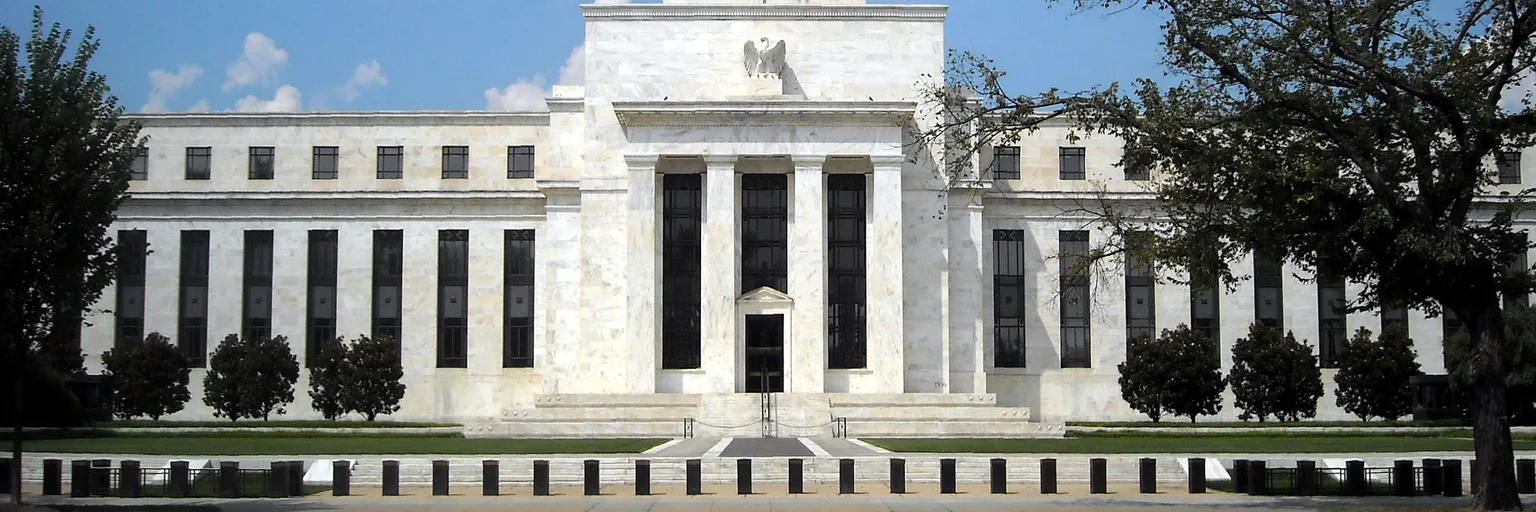
The Fed's December question is no longer if, but how much
A hot October CPI turned a quarter-point hike into the floor of the debate. Investors should stress-test bond and growth exposure for a steeper path, not one more step.
Photo: AgnosticPreachersKid / Wikimedia Commons (CC BY-SA 3.0)
Until this week, the argument on Wall Street was whether the Federal Reserve would raise rates again in December. After Tuesday, that argument looks quaint. The real question now is how big the move gets, and that changes how a careful investor should think about risk.
Here is what happened. The Bureau of Labor Statistics reported that consumer prices rose 0.4% in October, slower than September's 0.6% but above the 0.3% economists expected. Core prices, which strip out food and energy, rose 0.3% for the third month in a row, versus a 0.2% forecast. Hours earlier, Governor Christopher Waller had said that a core reading of 0.3% or more would lead him to consider a 50-basis-point hike on December 8-9. As Reuters reported, the print met his bar exactly.
The quarter-point is now the floor of the debate
Let's be precise about what is and isn't settled. A larger hike is a proposal from one governor, not a Fed decision. Futures pricing cited by Kitco put a quarter-point at roughly 88% and a half-point at roughly 12%, and CBS cited CME's FedWatch at 85% and 15%. So the market's base case is still 25 basis points.
But we think the odds may understate the drift. Dallas Fed President Lorie Logan said she feels the Fed needs to raise by at least half a point before pausing, and called the current 3.75%-4.00% range too low. Richmond's Tom Barkin was more cautious, but that's one voice against a committee that already had two dissenters wanting a hike in October. When the hawks are naming thresholds and the data lands on them, the burden of proof shifts, in our view, to those arguing for the smaller move. Waller's credibility argument is the sharp one: if inflation is broadening, a timid step risks needing more steps later.
And it does look broad. Medical care, auto insurance, recreation and furnishings all pushed core higher. That matters more than the headline, because energy can fall back and core pressure can stay. Oil softening hasn't been enough to cool the rest of the basket.
The bond market has already moved the goalposts
The reaction told the story. The two-year yield rose about 18 basis points in a session to near 4.725%, and the 10-year briefly poked above 5.00%. Gold and silver sold off as the dollar firmed. Reuters noted the two-year's rise was the biggest since early April 2025.
This is the part we'd stress. A two-year yield near 4.725% against a policy rate of 3.75%-4.00% suggests the market is already pricing a path well beyond one December step. The jobs data points the same way: 165,000 payrolls against roughly 65,000 expected, and unemployment down to 4.1%. A strong labor market removes the usual cushion that lets the Fed go slow.
What to do with this (and what not to)
This isn't a recommendation to buy or sell anything. It's a case for a better question. Many investors, we suspect, test their portfolios against "what if the Fed does one more 25?" The more useful test is "what if it does 50, then another in January?" TD Securities, per FXStreet, sees greater risk of another increase in January 2027.
Three things are worth checking, in our view. First, duration: if you hold long-dated bonds or bond funds, how much would they lose if yields climbed another full point? Second, growth exposure: stocks priced on profits far in the future are most sensitive to higher discount rates, and tech shares were already volatile. Third, borrowing: anything floating-rate, from credit lines to variable mortgages, gets more expensive on a steeper path.
The counterweights are real. Data is lumpy, the October annual rates weren't published because of last year's shutdown, so month-to-month figures carry extra weight and extra noise. The next checkpoints are producer prices on November 13, PCE on November 25, and November CPI on December 10, just after the meeting.
Our verdict: treat 25 basis points as the minimum, not the forecast. If the Fed delivers only that, you've lost nothing by being prepared. If it goes bigger, the investors who modeled it in advance will be the ones not forced to react to a bond market that has already moved.
No topics yet: start the first one.
More stories
Hands off the ECB: politicized money is a tax on savers
Pressure on the ECB may sound like cheap financing for governments, but we think the bill lands on savers and borrowers through a higher price for inflation risk.

The ECB succession deal is a rates signal, not Brussels theater
Paris and Berlin are haggling over who runs the ECB, but the real bet is how hawkish it stays. Savers and borrowers should read it as a rates signal.

The ECB's December hike is the base case, and savers should plan for it
With eurozone inflation at 4% on energy, markets are right to price a December hike. The smarter question is whether it's the last, and what that means for your money.

Warsh isn't picking hawk or dove: he's watching the bill
With US interest costs above $1 trillion, the Fed's mixed signals may be less about confusion and more about debt management. Savers should plan accordingly.