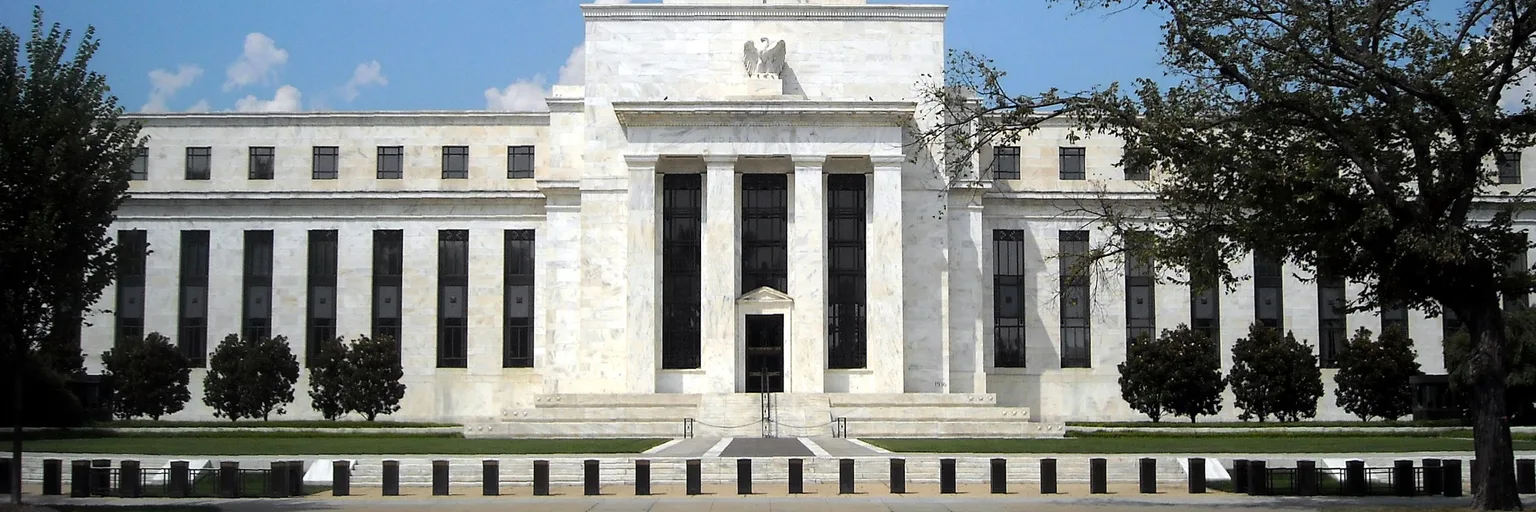
Corporate bonds are a fine refuge from stocks, if you stop calling them one
After a near-$3 trillion stock sell-off, investors are eyeing US corporate bonds; the smart move is to treat credit as an income sleeve, not a Treasury-style hiding place.
AI-generated image
When stocks stumble, the instinct is to look for a place to hide. The latest candidate is the US corporate bond market. The trouble is that "hiding" and "corporate" don't belong in the same sentence.
What happened
In the days after the November 3 midterms, Wall Street had a rough ride. According to Hindustan Times, citing Bloomberg, the S&P 500 fell 4.4% and the Nasdaq Composite 5.5% on November 5. The sell-off wiped out nearly $3 trillion in market value, and the Nasdaq 100 alone lost $2.3 trillion. Stocks bounced on November 9, but the S&P 500 was still slightly below its Election Day level at that day's close.
In that setting, Business Standard reports that US corporate bonds are attracting investors as turbulence grows. We haven't seen the details of that report, so we won't pretend to know the size of the flows or the yields on offer. What we can do is judge whether the move makes sense.
The rotation is logical, and a little too comfortable
After a violent week in equities, owning something that pays you to wait is appealing. A bond has a coupon and a maturity date. A stock has a story, and stories can change overnight.
The stock story is shaky right now. Analysts cited by Hindustan Times point beyond the election to worries about AI investment, tech earnings and the cost of building data centers. Another report, carried by The Zimbabwe Mail, says Reuters found Nvidia shares more than 30% below their October record as of November 12. That was after founder Jensen Huang's resignation and questions about AI spending. When the market's favorite theme gets questioned, investors who were overweight it want an exit.
Our view is that the rotation is sensible. The comfortable part is the label. A corporate bond is a loan to a company, not to the US government. If that company's business sours, the bond can lose value or, in the worst case, default. A Treasury doesn't carry that risk. Calling the two equivalent is the mistake.
Credit risk is the price of the extra yield
The extra income on corporate debt over government debt exists because lenders are taking on risk. It is not a gift. If a bond looks much more generous than a similar Treasury, ask what the market is worried about.
There is a second wrinkle. The same AI and tech worries hurting stocks can also reach the companies that issue bonds, especially those leaning on heavy capital spending. We don't have documentation on how corporate bonds in particular have behaved this week, so this is a caution and not a finding. But investors who treat credit as an escape from the AI debate may find they are still exposed to it, only through a different instrument.
Interest rates matter too. One analyst quoted by Business Standard warned that strong US retail data or a hawkish tone in the Federal Reserve minutes could reinforce expectations of tighter policy and keep Treasury yields above the 5% threshold. That is a forecast, not a fact. Still, it is a reminder that bond prices can fall when yields rise, even if the issuer never misses a payment.
How we would think about it
This is not personalized advice, and your own situation, time horizon and tax rules (which differ by country) matter more than any column. As a general framework, though, we would size corporate bonds as an income sleeve: a defined slice of a portfolio meant to produce steady payments and soften equity swings. It should not be the place where you park everything you were afraid to leave in stocks.
Three questions help. How long do you plan to hold the bond? How well do you know the issuer's finances? And could you tolerate a price dip, even a temporary one, without selling? If the answer to the last question is no, the money probably belongs in something closer to Treasury-grade safety, and the extra yield isn't worth the sleepless nights.
Diversification across issuers and sectors also matters more in credit than most newcomers expect. One bad name in a concentrated bond portfolio can hurt as much as a bad stock.
Verdict
The move into corporate bonds is a sound instinct. Stocks just had a rough stretch, and the bounce hasn't erased the unease. But we'd retire the word "refuge." Credit pays you to take a risk, and it should be sized like one. Use it for income, keep it to a measured share of a portfolio, and don't confuse a good yield with a guarantee.
No topics yet: start the first one.
More stories
The $3 trillion stock drop isn't a verdict on any party
Trump blames Democrats for a roughly $3 trillion sell-off, but the evidence points to AI worries and weak chip forecasts. Investors should check their risk, not pick a team.
Musk's AI bankruptcy warning is a prompt to audit your portfolio
Elon Musk expects a shakeout among AI cloud providers in 2027. Whether or not a crash follows, the useful question is how much of your portfolio rests on borrowed money.

Nvidia's real risk isn't earnings: it's one man's absence
Huang's exit and HSBC's cut to Hold turn Tuesday's report into a test of key-person risk, and index investors should check their exposure now.

Goldman's third Fed hike call says the plateau is far away
Goldman now sees a third hike in March 2027 and no cut until December 2027. Whatever the Fed does next, investors should plan for a long stretch of high rates, not a quick pivot.