The market now pays for profits on the books, not stories
After a rough week for AI stocks, money is moving toward companies that book earnings today. We think that is sensible, but it isn't a free pass for price-driven growth.
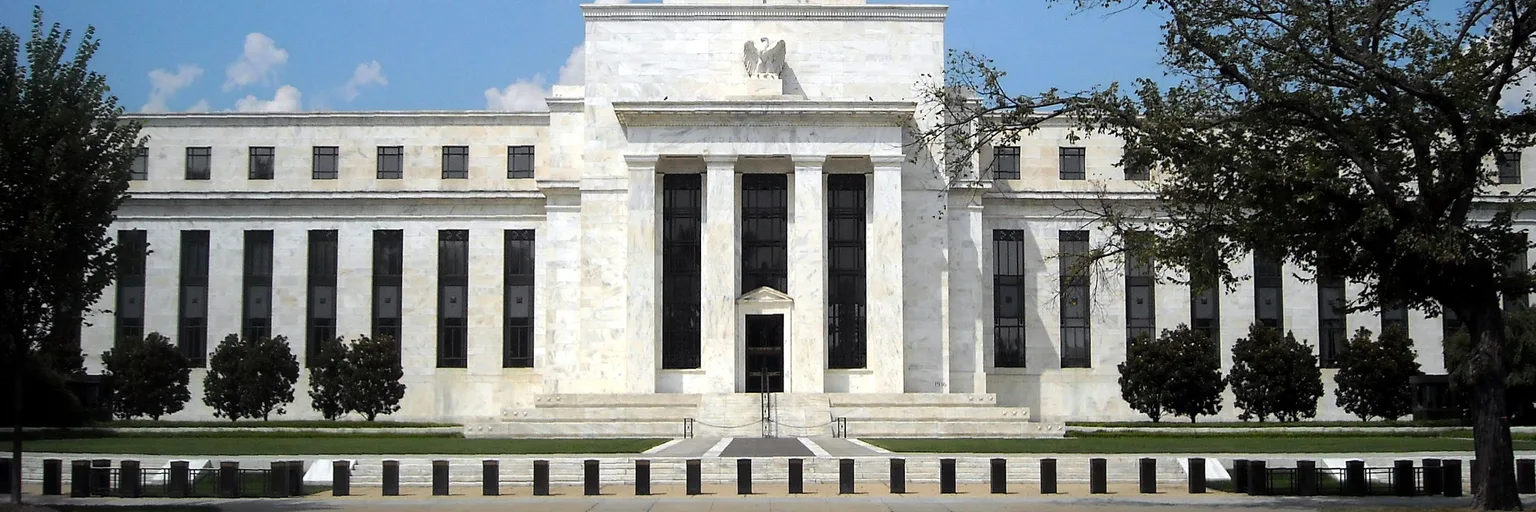
Photo: Thomas J. O'Halloran / Wikimedia Commons (Public domain)
What is a promise worth when the interest rate on money goes up? This week the market gave a blunt answer: less than it was worth last month.
The facts, as Boerse Express reports, are stark. Nvidia lost its CEO, Jensen Huang, on Thursday and more than $600 billion in market value within a week. On the same day Germany's DAX rose above 27,000 points for the first time. On Friday, according to the dts news agency, the Nasdaq 100 was down about 1.2% shortly before the close while the Dow edged up 0.1%.
Boerse Express reads this as a rotation: capital leaving US tech for companies that book profits now rather than promising them for 2028. That is one outlet's interpretation, and a single week is a thin base. Still, we find it persuasive.
Profits are the only thing that doesn't depend on the discount rate
The simplest explanation is also the least glamorous: rates. The same report says US producer prices rose 6.5% year on year in October, the fastest since November 2022. It also says the market sees a Fed hike in December as likely. That is the report's claim, and the Fed meets December 8 and 9.
When money gets more expensive, a dollar of profit in 2028 is worth less today, while a dollar earned this quarter keeps its value. You don't need a theory of AI to see that. It is arithmetic, and it hits the most speculative assets hardest. Bitcoin is the example: it fell below $70,000 for the first time since August, and US spot ETFs lost $2.35 billion in two weeks.
Henkel is the model, and also the warning
Henkel is the poster child for the new mood. Organic growth of 6.5% in the third quarter against 4.1% expected, a raised full-year outlook, and a stock up 25% year to date. That is what investors pay for.
But look at the detail. Sales volume rose only 1.1%, so most of the growth came from higher prices. Jefferies' David Hayes is bothered by exactly that, and the bank kept a "Hold" even as it raised its target to €85. Raw material costs are expected to run about 10% above last year. In our view, "already produces cash" is a starting filter, not a conclusion. Profits that rest on pricing power are only as durable as the customer's patience.
Anthropic is the stress test, not a contradiction
The awkward part of the thesis is that the biggest event next week is an AI listing. Anthropic plans to start trading on the Nasdaq on Thursday at a valuation of up to $1.4 trillion. According to the report, its annualized revenue was $81 billion at the end of October and demand is six times the supply. With a private placement it could raise up to $90.4 billion in total.
So revenue is not the problem. The question is price and timing. The report notes that 87% of respondents in the Fed's financial stability report named AI as a risk. It also says the investors in the private placement were under pressure themselves, and that AMD fell 8.6%. Nvidia reports Tuesday after the US close, with 90% earnings growth expected, yet the stock is down 26% in 30 days. If even that doesn't calm things, the market is truly repricing.
What we'd do with this
This is not personal advice, and we can't predict next week. But the argument is straightforward:
- Companies with real earnings and cash flow deserve a larger weight than a promise of earnings, especially while rates look to be heading up.
- Check whether the profit comes from volume or just from price increases.
- Anyone tempted to buy the AI dip could reasonably wait until after the Fed meeting, as Boerse Express suggests. Waiting costs you a rebound, not your capital.
Our verdict: leaning toward cash-producing companies is sound, but don't treat it as a rule that stories never win. The market hasn't stopped paying for the future. It has started demanding a discount, and for now that discount is the right call.
No topics yet: start the first one.
More stories
Cattle you can't verify aren't an asset: the lesson of Agridime
A Fort Worth jury convicted two brothers in a $240 million cattle Ponzi. The lesson isn't to avoid tangible assets. It's that a story about an asset proves nothing.
Anthropic's IPO asks you to pay for perfection: treat it as a price test
At $70-$78 a share, Anthropic's debut prices in flawless growth, huge compute bills and benign markets. Size any position as a bet on the price, not a lottery ticket.

If the Fed hikes in December, trim the edges, not the core
A quarter-point hike is mostly priced in. The sensible response is a check on bond duration, cash yield and leverage, not a portfolio overhaul driven by a headline.
Floating-rate ETFs aren't a Fed hedge: TFLR is an income tool
A 57% drop in short interest on TFLR says little about rates. Floating-rate loans pay more when the Fed hikes, but they carry credit risk and are no safe haven.