Nvidia wants its chips financed like cars: the catch is how fast they age
Jensen Huang's pitch to treat GPUs as collateral says demand isn't the problem, money is. But silicon wears out faster than houses, and lenders know it.
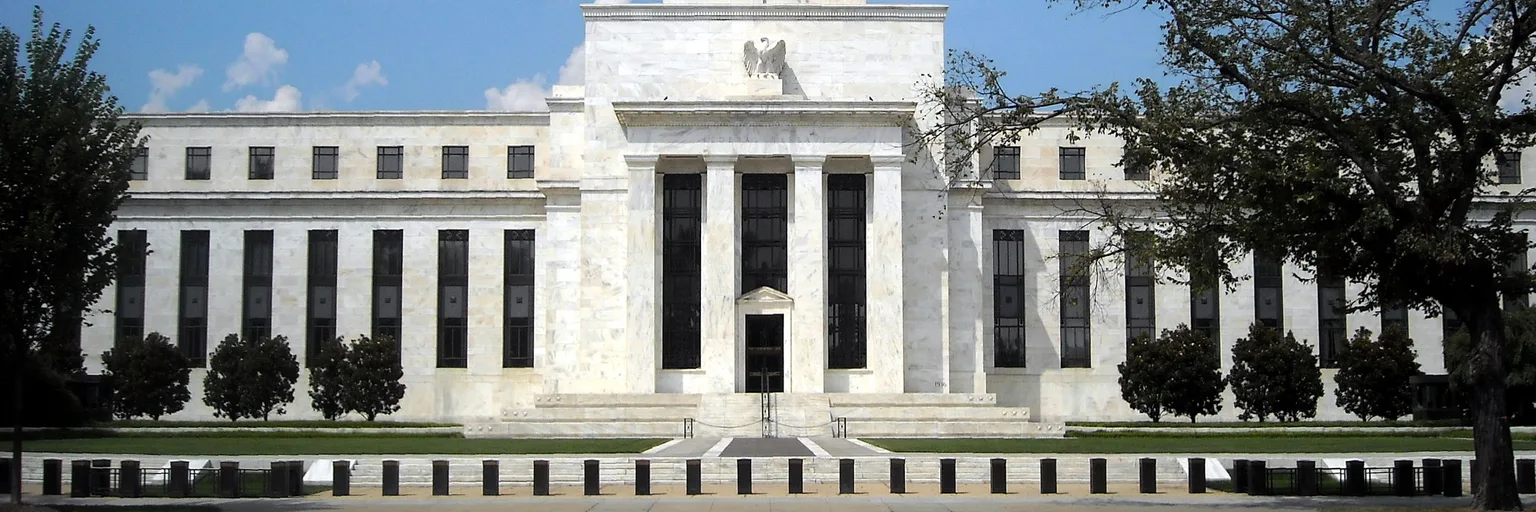
AI-generated image
When the world's most valuable chipmaker starts helping customers get loans to buy its products, it's fair to ask who, exactly, is confident about the future. Our answer: the seller is, and the lenders are still thinking about it.
Nvidia CEO Jensen Huang is pushing banks and asset managers to treat the company's GPUs as collateral, much as a car secures an auto loan. According to CNBC, Nvidia announced agreements in August with six big firms (BlackRock, Blackstone, Apollo, KKR, Brookfield and Goldman Sachs) to build a $500 billion pipeline for data centers and GPU clusters. Huang calls the platform "an investable asset, an infrastructure asset." This week he said demand from neoclouds is "off the charts" while acknowledging that the capital needed far exceeds what is available.
The pitch admits what the demand story hides
Demand "off the charts" and a financing gap are two sides of one statement. If customers could pay from cash flow, nobody would need to redesign how chips are collateralized. The buyers in question, per a Bank of America Securities note cited by CNBC, are likely to be non-investment-grade firms such as AI startups and neoclouds, locked out of traditional debt markets.
That doesn't make the demand fake. It does mean the buildout depends increasingly on credit markets, not just on order books. As one report summarizing the pitch notes, Nvidia has also said it may guarantee part of the chips' future value. We think that's the detail to watch: the more a vendor props up its customers' borrowing, the more its growth is exposed if lenders get cold feet. Rising bond yields at heavily indebted neocloud operators suggest some may already be getting cautious.
A chip is not a house, and not even quite a car
Some coverage compares this to a mortgage. That comparison fails: homes generally appreciate, chips wear out. The auto loan is the fairer analogy, since lenders finance depreciating cars because the decline is broadly predictable. The open question is whether GPUs have a predictable curve.
Huang's case is that the processors can earn revenue for more than a decade and be redeployed between customers. He points to H100 rental rates, which CNBC says rose from roughly $1.70 per GPU-hour in late 2025 to about $2.35 this year. Industry practice, by contrast, typically depreciates this hardware over three or four years, not a decade.
Rising rents on old chips are real evidence, but in our view they reflect scarcity right now, and scarcity ends when supply catches up. CNBC also notes that new chips train frontier models, then get relegated to lower-margin inference work, which hits resale value. And Ben Emons, who structured similar asset-backed loans earlier in his career, warns Nvidia chips "could depreciate faster than expected," with China as a possible price-war risk. Huawei's chips are currently barred for US companies, so that threat isn't imminent, but collateral is priced on tomorrow's worst case.
Wall Street is engaging, but with a price tag
The big asset managers have signed on, but nobody is offering house-style terms. Emons expects investors to treat GPUs as high-depreciation equipment and demand returns of 11% to 17%, depending on position in the capital structure. Reuters reported on October 1 that bankers and asset managers have some doubts that the chips can act as long-term collateral, as Nvidia says.
If Emons is right, those rates are the market's real opinion of "financeable asset." Nobody pays 11% to 17% against something it considers a house. If a borrower fails, funds must repossess and resell used chips, potentially into a falling market. That is the loop that should worry you: falling chip prices weaken collateral, weakening collateral tightens credit, tighter credit slows chip orders.
The timing adds color. The Philadelphia Semiconductor Index fell nearly 7% in Thursday's session, and Nvidia dropped about 4.5%, as investors questioned how long the capital-spending cycle can run.
Our verdict
Nobody should read this as proof the AI boom is about to collapse. Nvidia holds upwards of 75% of the US AI chip market by most estimates, and the economics still favor Huang today. But for anyone owning AI infrastructure stocks, through an index fund or otherwise, demand forecasts are no longer enough. Ask who is lending, at what rate, and against what depreciation schedule. This isn't personal advice, just a lens: when growth is financed by the vendor's own optimism, the weakest assumption, here how long a chip stays valuable, carries the whole structure. We lean cautious until lenders accept that assumption at car-loan prices, not at high-yield ones.
No topics yet: start the first one.
More stories
AT&T's SpaceX sell-off is a valuation reset, not a death sentence
The market is pricing satellite competition as an existential threat to carriers, but a debt-heavy sector's repricing is the likelier story, and cash flow is where to look.

Silver's slide shows metals are rate trades, not automatic hedges
Silver just hit its lowest level in nearly a year as oil revived inflation fears. Precious metals behave like rate-sensitive assets, and investors who assumed otherwise are learning that now.

Stellantis at record lows: cheap is not the same as a bargain
A 7% drop to all-time lows after Volvo's slump is not a dip to buy. Until Stellantis shows cash coming back, its low price tells us more about risk than value.
The Fed can't afford a dovish shrug next week: stress-test for another hike
With core CPI above forecast, oil a swing factor and gold under $4,000, the October 28 meeting tests Warsh's credibility more than the quarter-point itself.