Audi's China reshuffle is a retreat dressed as a strategy
A new China chief and a market in free fall show German premium carmakers are now defending, not growing. Investors should price in thinner margins, not a quick rebound.
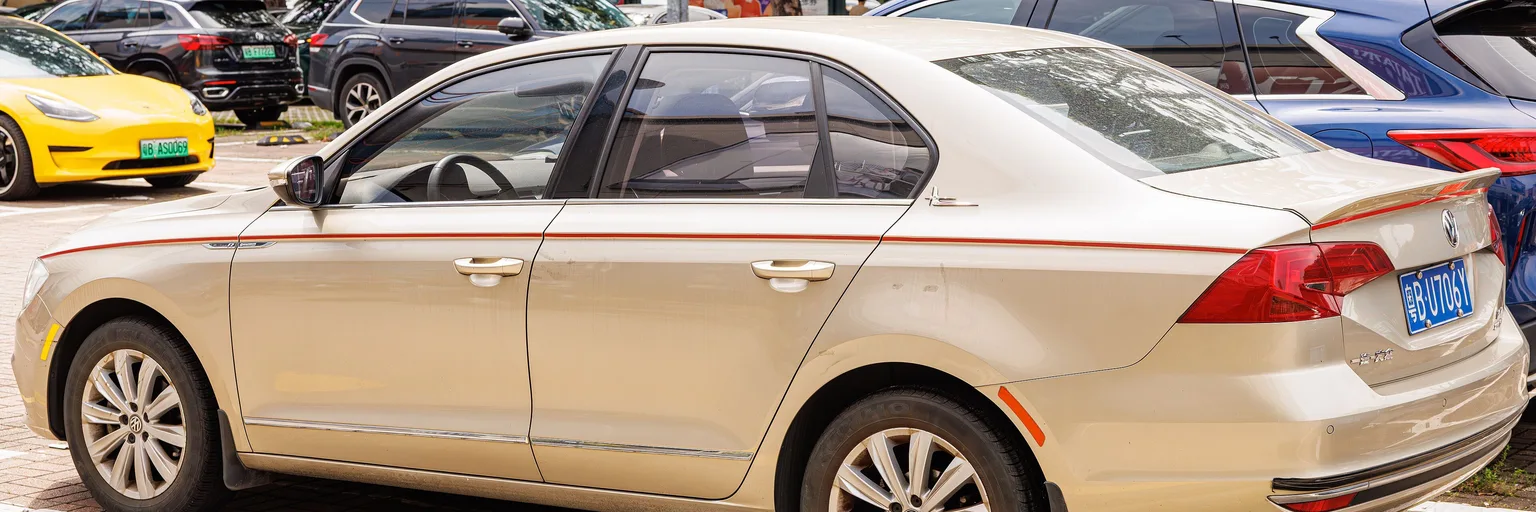
AI-generated image
For two decades, China was the money machine that let German carmakers shrug off almost anything. What does it mean when the people running that machine start saying nobody makes money there anymore?
That is roughly where we are. Reuters reports that Audi announced a shake-up of its China leadership amid tough competition and falling sales in the world's largest auto market. According to Audi's own press release, Jeff Zhang becomes President of Audi China on November 1, 2026, while Rolf Michl, until now managing director of Audi Sport GmbH, moves to China as Chief Operating Officer.
A day-to-day detail, perhaps. But it came just days before Volkswagen's China chief, Ralf Brandstätter, told Handelsblatt that the overall Chinese market is in "free fall." Our reading: Audi's reshuffle isn't an isolated HR story. It is one symptom of a much bigger repricing.
The numbers say defense, not growth
Consider what Volkswagen said. As dpa-AFX reports, the group's China sales fell 38.5% in the third quarter to 405,800 cars, and China accounted for more than 80% of the group's global decline. The overall market sold more than 24 million vehicles in 2025, and market researchers expect fewer than 19 million this year. Brandstätter does not expect a significant recovery next year.
Then the quotes that matter most for investors: "Hardly anyone still earns money in this market" (in the original German, "Kaum jemand verdient in diesem Markt noch Geld"). And: "China is no longer a growth machine." He declined to say whether VW is still profitable there ahead of its quarterly results. That silence is informative, though we'd stress it is an inference, not a disclosure.
Compare that with the company's 2030 ambitions. In spring, they were already cut from 3.5 to 4 million vehicles to around 3.2 million. Holding an 11% share of a 19 to 21 million market implies roughly 2.1 to 2.3 million. The comparison is not perfectly like-for-like, since Brandstätter says the earlier figures did not include exports, which he says will offset part of the decline. Even so, it is a very different business from the one the German premium model was built around.
Putting a local face on the brand is smart, but it isn't a cure
Choosing a Chinese executive to lead Audi's China business may signal, as cnevpost cites Jiemian noting, a push for stronger local decision-making. We think that is the right instinct. Local EV brands keep taking share from traditional luxury carmakers, and speed of decision-making is where they win. Cars that take years to adapt to local taste lose to those that take months.
But a leadership change is not a product, and it is not a price. Our skepticism: management can shorten development cycles, yet it can't bring back consumer confidence, which Brandstätter says is weak because shoppers worry about their jobs. Nor can it erase the cost gap. VW itself says the low cost base of Chinese manufacturers is very hard for companies outside China to match.
Notice what VW's answer is: build in China, export from China. The "In China, Beyond China" strategy, with exports already going to Kazakhstan and Uzbekistan and Mexico, Egypt, Vietnam and Australia to follow, is pragmatic. It is also, in our view, an admission that the domestic prize has shrunk, and that the group is now using Chinese costs and technology as a defensive weapon. VW has also cut capacity in China by more than a million vehicles and plans to go further. Shrinking to fit is not what a growth story looks like.
What investors should do with this
This is not personal advice, and we're not forecasting a price. But the framing matters. If you hold German auto stocks, the question is no longer "when does China bounce back?" It is "what do margins look like if China stays at roughly 19 million vehicles, with aggressive local pricing?" On the evidence so far, we'd lean toward the second assumption.
Three things we'd watch: whether VW reveals China profitability in its quarterly numbers; whether Audi's new team shows up in product and pricing rather than titles; and whether exports from China actually add volume without cannibalizing margins elsewhere.
Our verdict: treat Audi's China overhaul as a sign the premium premium is eroding, and price in lower margins for longer. A rebound may come, but we see little in the numbers so far to suggest it is close, and betting on it looks more like hope than analysis.
No topics yet: start the first one.
More stories
Volkswagen's €5.8 billion loss: demand cash-flow proof before calling it cheap
A multibillion third-quarter loss, restructuring charges and a collapse in China deliveries should make investors doubt the "cheap stock with a dividend" story.
Santander's €12.4bn is a Poland story; the €11.2bn is the real one
A 20% jump in profit looks like a bank firing on all cylinders, but a one-time gain from selling Poland inflates it. Ordinary profit tells the truer story.

Frasers' Hugo Boss majority is a control play, not a payday
With 50.08% secured and no higher price on offer, minority shareholders get less takeover upside and more governance risk. Judge the stock on cash flow.

Audi's $4 billion Georgia plant is a tariff toll, not a growth bet
Audi's first U.S. factory was announced on a Trump campaign stage, years before it builds a car. We think investors should read it as defensive spending, not expansion.