France's Debt: A 'Guilty Verdict' Threatening the Eurozone's Core
France's soaring bond yields are reigniting Eurozone crisis fears and weakening the Euro, proving how fiscal instability in a core member can ripple across the bloc.
AI-generated image
Is the Eurozone on the brink of another sovereign debt crisis, mirroring the tumult of a decade ago? The recent surge in France's borrowing costs suggests this is not merely a hypothetical concern, but a pressing reality that could shake the foundations of the entire European bloc. With French bond yields now alarmingly high, we are seeing a critical test of Europe's economic resilience.
The alarm bells began ringing as France's 10-year bond yield flirted with the 5% mark on October 1, 2026, a level not seen since 2002. More tellingly, the spread—the difference in yield—between French and German 10-year bonds widened to approximately 150 to 152 basis points, reaching levels last observed during the depths of the euro debt crisis in 2011 or 2012, according to sources like BFM and Quartz en Français. This significant widening signals a stark decline in investor confidence. Concurrently, the Euro has fallen to a 17-month low against the U.S. dollar, dropping below $1.12, a level last recorded in May 2025, a trajectory reported by Reuters and other outlets. The fear of contagion, once relegated to the periphery of the Eurozone, now looms large over one of its core economies.
Not Your Parents' 2002
While the headline figure of 5% bond yields might remind some of 2002, the context today is fundamentally different and far more concerning. In 2002, France's debt-to-GDP ratio stood at roughly 60%. Today, this figure has swelled to 119% of GDP, with projections pointing to 122% next year, as Yahoo Finance and Fortune report. This means France is now servicing a debt pile nearly double the size it was two decades ago. Moreover, the country's economic growth was significantly more robust in 2002, offering a stronger buffer against borrowing costs. Compounding the issue, France's borrowing needs have dramatically increased. In 2002, France issued 85 billion euros in net medium and long-term debt; for 2026, this figure stands at 310 billion euros, expected to climb to 340 billion euros in 2027—four times higher than a quarter-century ago. These factors underscore why a 5% yield today carries a far greater financial weight and risk.
The “Guilty Verdict” from Investors
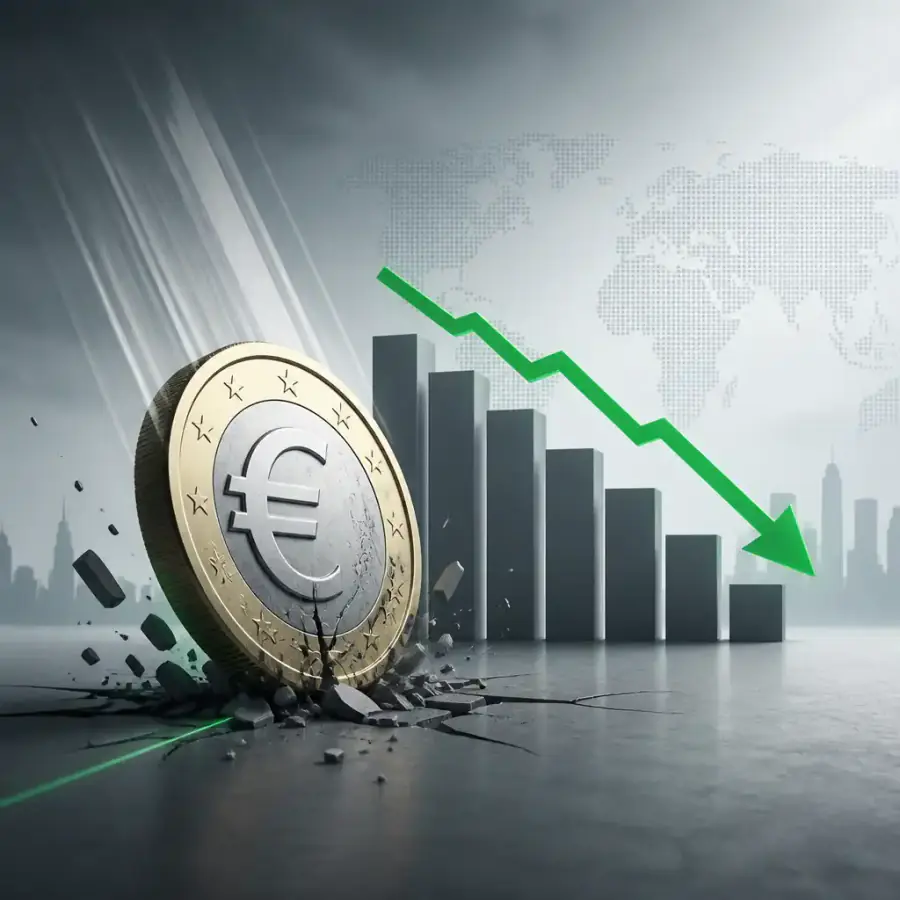
The mechanics of bond markets are straightforward: when investors lose confidence in a country's ability to manage its finances, they sell off that country's bonds. This increased supply drives down bond prices, and as a direct consequence, their yields rise. A higher yield effectively means the country must offer a greater premium to attract buyers, reflecting the increased perceived risk. This dynamic explains why rising French yields are symptomatic of investors rendering a “guilty verdict” on France’s public finances, as Fortune and Yahoo Finance highlight. They are demanding a higher premium for the risk associated with French debt, a clear sign of skepticism regarding its fiscal sustainability.
The ECB's Looming Dilemma
The spreading concern has now drawn in the European Central Bank (ECB), which faces a difficult choice. Its Transmission Protection Instrument (TPI), created in 2022 to prevent
No topics yet: start the first one.
More stories
Bond Yields and Volatility: Why Diversification is Key Now
Recent stock market retreats and surging bond yields signal a complex tug-of-war for investors. As inflation lingers and economic growth remains uncertain, a diversified approach is more crucial than ever.

Depleted Oil Reserves Signal a New Era of Market Volatility
The near exhaustion of global security oil reserves is not just a passing headline; it's a critical inflection point for energy markets, promising heightened volatility and inflationary pressures.

AI's Dual Edge: Boosting Markets While Propping Up High Rates
The AI revolution is driving record market optimism and massive investment, yet paradoxically, it also contributes to stubbornly high interest rates, making selectivity crucial for investors.

High Treasury Yields: Why the Bull Market Might Still Roar
Despite traditional indicators suggesting otherwise, robust corporate earnings growth could defy persistent high Treasury yields, keeping the stock market's upward trajectory intact.