The Dow's 1,100-point round trip hid the real story: higher for longer
A green close masks hot inflation, new tariff proposals and a Fed that may have less room to cut, so stress-test your portfolio instead of cheering the rebound.
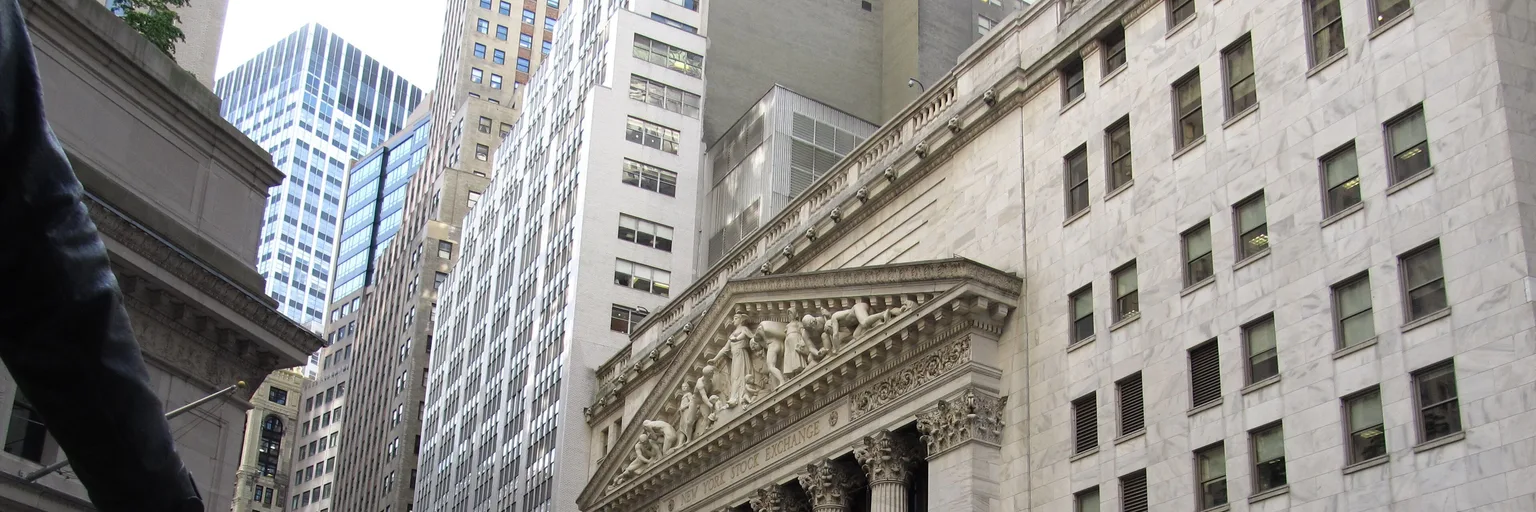
Photo: Ken Lund from Reno, Nevada, USA / Wikimedia Commons (CC BY-SA 2.0)
Is a day that ends green really a good day? On Wednesday the Dow fell more than 1,100 points and then finished higher. The scoreboard says "fine." We think the scoreboard is the least useful thing on the screen.
Here is what happened. According to The Motley Fool, the Dow rose 0.33% to close at 50,183, while the Nasdaq Composite lost 0.62%. As iHeart reported, the S&P 500 slipped 0.25% and Nvidia dropped 3.91%, after losing 5.9% the day before. The same day, the Trump administration proposed new tariffs on 14 trading partners. China faces the largest proposed increase, at 20%, on top of existing duties. The PCE price index rose 0.3% in October and is 3.8% above a year earlier. Excluding food and energy, prices are up 3.3% year over year, just above the 3.2% economists expected.
The rebound is a mood, the inflation print is a fact
The late-day recovery tells us how nervous and how quick-fingered traders are. It doesn't tell us anything about the path of prices. Core inflation at 3.3% is not close to a comfortable zone. The Motley Fool also notes that the core PCE index rose 0.3% for the third consecutive month. Each of those months looks small. Together they describe an economy where price pressure isn't fading on schedule.
Now add tariffs. These are proposals, not final rules, and we don't know their final scope or timing. But the direction matters. Tariffs tend to be a cost that someone eventually absorbs, whether importers, retailers or consumers. For a central bank already looking at hot core readings, a fresh potential source of price pressure is a reason to wait. iHeart noted that the inflation data added to expectations that the Fed will raise rates in December. That is a striking shift from the debate over when rate cuts begin, which many portfolios were built around. Treat it as market expectation, not a certainty.
The losers aren't random: duration is the problem
Look at who sold off. Nvidia, Micron and AMD fell, while energy led sector gains and defensive names like Charter Communications climbed. The Motley Fool puts the 10-year Treasury yield at 4.91%. Our reading is that high-growth companies, whose value rests on profits far in the future, are the most exposed when money stays expensive. Elevated valuations and AI spending worries were already there. Higher rates make them harder to wave away.
That is why we'd resist the "buy the dip" reflex on tech. A dip driven by a one-off scare can bounce. A dip driven by a higher discount rate may be a repricing. Wednesday doesn't prove which one this is, but the inflation data points toward the second.
What to do with this: stress-test, don't trade
We aren't going to tell you what to buy. This isn't personalized advice, and nobody can promise where markets go from here. But a few questions are worth asking about your own portfolio:
- What happens to it if rates stay near today's levels through next year, rather than falling?
- How much of it depends on a handful of AI-linked stocks? Even Bank of America's 7,800 S&P 500 target for late 2027, cited by The Motley Fool, requires profits to broaden beyond a narrow group of tech companies. That is a forecast, not a given.
- If tariff-driven inflation arrives, which of your holdings can raise prices and which can't?
- Is any of your cash needed within a few years? Yields at these levels change the comparison between waiting and investing.
Intraday swings like Wednesday's are noise for long-term savers and a trap for short-term traders. The signal is slower: inflation that won't go away, and a policy mix that makes rate relief less likely.
Our verdict: don't celebrate the green close. Assume higher for longer as the base case, check how your portfolio behaves under it, and treat any rate cuts as a bonus rather than a plan. Markets reopen Friday for a shortened session, and we'd skip trying to read anything into it.
No topics yet: start the first one.
More stories
The S&P 500's best week in 19 months is a bounce, not a new regime
A violent AI-led rebound repairs sentiment, but it leaves the rate and AI-spending questions behind November's rout untouched. Chasing it is the wrong lesson.
A 156-year stock market warning with six data points isn't a forecast
A signal seen only six times in 156 years makes a scary headline but thin evidence. Use it as a prompt to check concentration, not as a reason to time the market.
S&P's Nvidia warning shows governance is a priced risk
A rating agency says Nvidia's board may have compromised its independence and its CEO is a key-man risk. For index investors holding the megacap, that's not a footnote.

A fear-gauge "buy signal" tells you about mood, not about the bottom
A spike in fear gauges says investors are scared, not that the sell-off is over. With AI valuations and sticky inflation in play, use any such signal to audit your plan.