AI Is a Capital Shock, and Higher-for-Longer Rates May Be the Price
The IMF says AI demand is pushing prices up worldwide. We think savers and investors should plan for a world where borrowing stays costly instead of waiting for cuts.
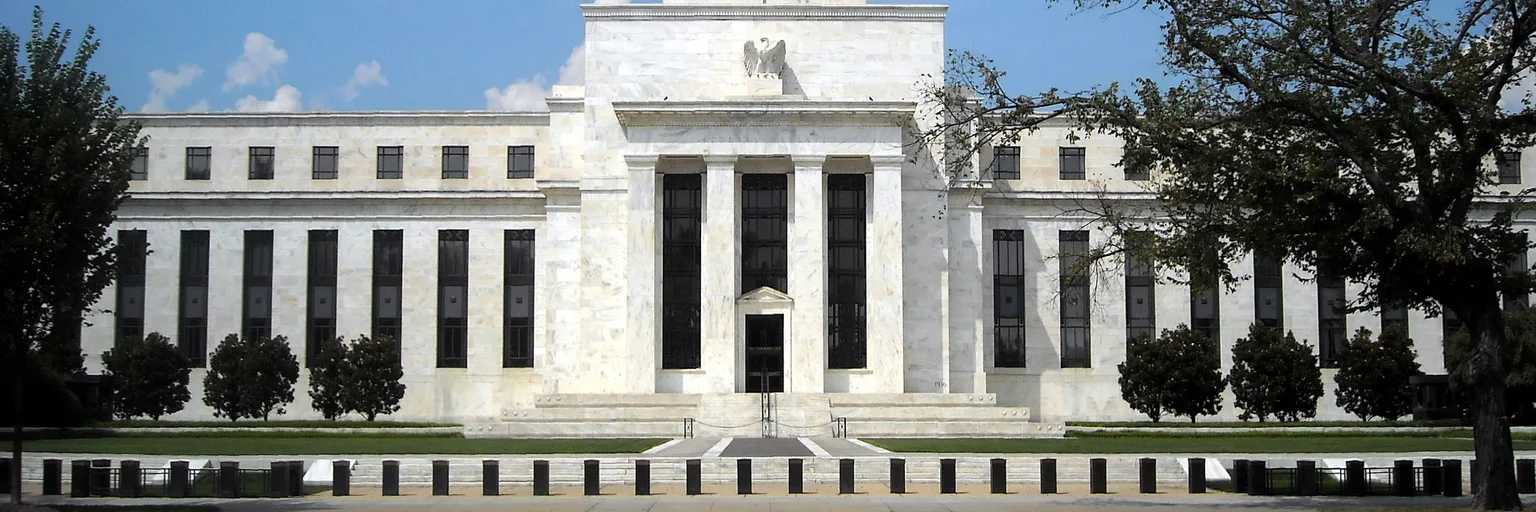
Photo: DOE / National Renewable Energy Laboratory (NREL) / Wikimedia Commons (Public domain)
What if the next rate cut isn't coming because the economy is too busy building the future? That is the uncomfortable reading of this week's warning from the International Monetary Fund, and we think it deserves more attention than the usual guessing game about the next central bank meeting.
The IMF just made rate cuts a harder bet
Speaking at the Apec summit in Shenzhen, IMF managing director Kristalina Georgieva argued that booming demand for AI hardware and related tech products is pushing up consumer prices around the world. As reported by AOL, she said that, together with the energy shock from the war in the Middle East, this would push global inflation to 4.7% this year. Her conclusion: "This calls for a tightening of monetary policy in many economies."
The context matters. The same report says the European Central Bank raised rates in June, the Federal Reserve in September and the Bank of England this month, and that markets expect further increases next year. Oil has fallen back in recent weeks. Georgieva's point is that the energy shock will eventually fade, but "AI is for ever."
Energy shocks fade; a capital boom doesn't
Here is our opinion: that last line is the most important one for investors. Most inflation scares are temporary because the cause goes away. An investment cycle is different. When companies and governments race to build chips, data centers and power capacity, they compete for money, materials and workers at the same time. That tends to keep the price of capital up. Georgieva said AI hardware and related products already account for more than one-tenth of world goods trade, and that the share is rising quickly.
Financing is part of the story. The Börsen-Zeitung, summarizing ECB vice president Boris Vujčić, says the AI sector's funding needs are unprecedented and increasingly covered with credit. Another report on his remarks notes that government debt concerns, which have grown on both sides of the Atlantic, are among the factors pushing up long-term yields. Put those together and you get plausible pressure on borrowing costs from several directions. That is our interpretation, not a forecast anyone has guaranteed. The AOL report itself points to risks cutting the other way: fears of an AI bubble could dent business investment, and economists warn that high inflation squeezes households and could slow demand.
The market is priced for perfection
Meanwhile, equity valuations look stretched. Börse Online reports that the Shiller P/E of the S&P 500 sits around 39 to 41, against a long-run median of about 16.6, a level exceeded only around 1999 and 2000. The same article stresses that the indicator doesn't time crashes. It points more to weaker returns over ten years than to an imminent fall.
Then there is the Anthropic IPO, which Tagesschau says could raise a record of more than 81 billion dollars at 83 dollars a share, even though the company still posts high losses. We read that as a confidence test for the whole sector. High valuations and rising rates have an awkward relationship: the more the future is priced today, the more sensitive prices are to the cost of money.
What we would do with this (and what we wouldn't)
This is not personal advice, and rules and tax treatment differ by country. But the logic is straightforward.
- Stop budgeting around cuts. If a plan only works when rates fall, it is a bet, not a plan. Test your mortgage, loans or business borrowing against rates staying where they are or rising.
- Treat savings yields as a feature, not a bug. In our view, higher rates make cash and bonds more useful than in the previous decade. Keep an emergency fund, as the Börse Online piece also suggests.
- Diversify away from one story. The same article notes that those holding large amounts of US tech in 1999 suffered most, and that regular rebalancing would have reduced risk.
- Don't try to time it. Börse Online cites an analysis showing that investors who sold during drops of 20% or more and re-entered later kept on average about 71% of the wealth of those who held. It also says that waiting for a better moment was often costlier than saving regularly.
Verdict
The IMF's warning may not play out exactly as stated; central banks can pause, and a bubble scare could slow everything. But the direction of the argument is hard to dismiss: if AI is a lasting demand for capital, cheap money is probably not coming back on a schedule. We think the sensible response is boring, and that is a compliment: build buffers, spread risk, keep saving, and stop waiting for a rescue from the next meeting.
No topics yet: start the first one.
More stories
The Fed's December question isn't if, but how much: stress-test for 50bp
The minutes say almost everyone expects more hikes, and a couple of officials float a half-point. A 50bp move isn't the base case, but it's the right stress test.
Nvidia's record quarter was the price of admission, not a victory lap
A quarter that more than doubled revenue arrived after four straight down days for U.S. stocks. The real question is how much AI-chip risk sits in your own portfolio.

Gold and silver aren't broken: they're just rate and dollar trades
Gold and silver hit one-year lows as the dollar firmed and rate worries grew. That should make savers ask why they own metals before they buy the dip.

The ECB's AI warning is a concentration check, not a sell signal
Central banks are flagging AI valuation risk the week Nvidia reports. The sensible reading is to look at how much of your portfolio rides on one theme, not to dump it all.