Canada's rate hike is a warning shot, not a one-off
The Bank of Canada's move to 2.5% is driven by an oil shock that isn't local, so borrowers elsewhere shouldn't assume cuts are coming back soon.
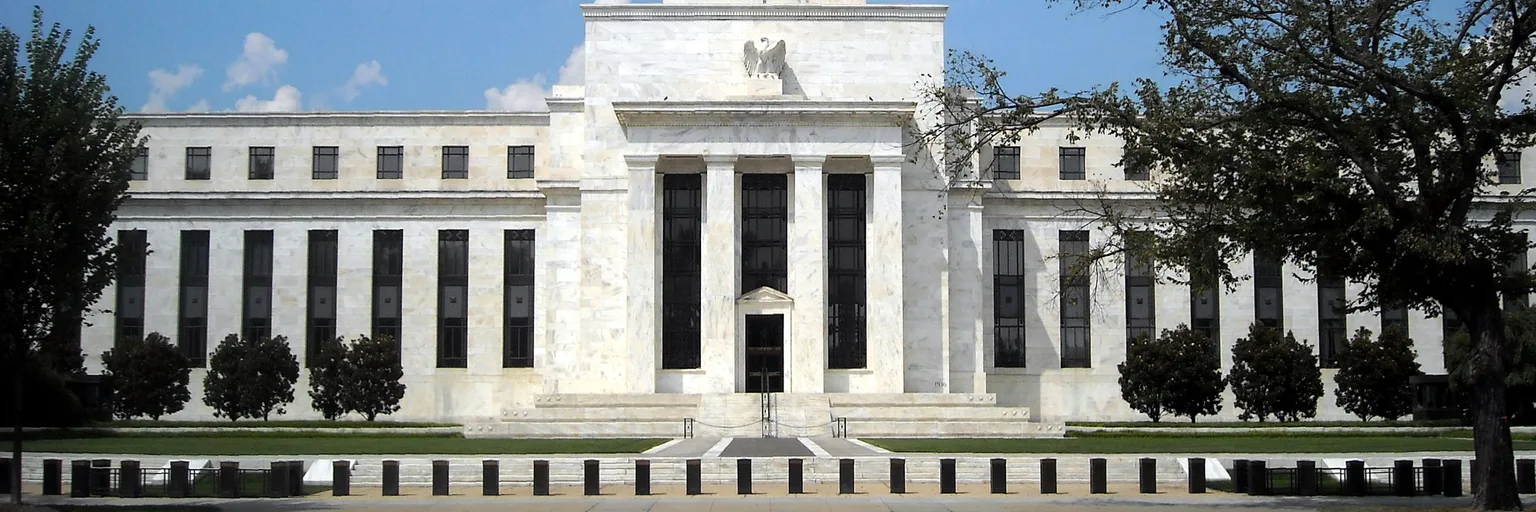
Photo: shankar s. from Dubai, united arab emirates / Wikimedia Commons (CC BY 2.0)
Is a central bank that raises rates while core inflation sits near its target being prudent or paranoid? That's the argument the Bank of Canada just handed to the rest of the world, and we think the answer matters well beyond Ottawa.
On October 28, 2026, the Bank of Canada raised its overnight rate by 25 basis points to 2.5%, its first increase since July 2023. The bank said inflation is now higher and more persistent than it projected in July, and it expects CPI to reach about 3½% by year-end and average 3% in 2027. Governor Tiff Macklem added that "there could be a need to raise the policy rate further," though the bank will proceed carefully.
The trigger is not a Canadian overheating story. It is energy: the bank points to a conflict in the Middle East now in its eighth month with no clear path to resolution, and to oil prices expected to stay higher for longer. That detail is the whole point.
The cause is global, so the logic travels
If the problem were a local housing boom or a wage spiral, Canada's hike would be a Canadian story. It isn't. The bank itself says inflation has risen in most countries amid persistently elevated oil prices and refinery margins, and that sovereign bond yields in advanced economies are higher than in July.
There is also a data point that should make everyone pay attention: according to Reuters, the US Federal Reserve raised rates in September and was largely expected to hold this week. So Canada is not the only North American central bank to have tightened lately. We can't say the Fed's reasons match Ottawa's, but in our view two neighbors moving in the same direction in the middle of a global energy shock is a pattern worth taking seriously, not an anomaly.
We wouldn't go as far as saying every central bank is about to tighten. Each one faces its own mix of growth, jobs and prices, and rules on mortgages and loans differ sharply from country to country. But the assumption many households have been making, that the next move is always down, looks shakier than it did a month ago.
The case against the hike is real, and it's worth hearing
This isn't a unanimous call. Canada's headline inflation was 3.1% in September, but the bank's own statement says excluding gasoline it was 2.2%, and core measures remain close to 2%. Macklem said the bank considered holding.
David Rosenberg of Rosenberg Research was blunt, calling the decision "totally unnecessary and premature" and arguing that tightening into a global supply shock is a risky game. He sees it as an insurance hike and expects "one and done or two and through." CIBC's Andrew Grantham, by contrast, expects a pause on December 9 and another quarter-point hike in January.
Here is our reading: even the skeptics are arguing about how many more hikes, not whether rates fall. And the central bank is explicitly worried about what happens next, not what happened already. It says businesses have mostly absorbed higher input costs so far, but its surveys suggest more of that will be passed to customers over the next year. Central banks hate being late, and this one appears willing to be early, even at the cost of being wrong.
That's a forecast about behavior, not a certainty. If the conflict eases, the case for further hikes weakens quickly, and Macklem himself said a resolution in the Middle East could happen, even if it doesn't look imminent.
Variable-rate borrowers are the ones with the most to lose
Who feels this first? Anyone whose payment moves with a benchmark rate. The Canadian Press notes that the bank itself expects rising borrowing costs, partly fueled by its own hike, to weigh on home buying and construction in the years ahead. That's an unusually candid admission that the medicine has side effects.
None of this is personal advice, and what to do depends on your contract, your country and your cushion. But as a general principle, we think the sensible exercise is simple: take any loan, mortgage or credit line with a floating rate and calculate what your payment looks like if rates are a point higher a year from now. If that number is uncomfortable, now is the time to look at your options, not after the next decision.
Savers get a quieter lesson. Higher-for-longer can mean better deposit rates, but it also comes with inflation that eats into returns. A rate that looks generous on paper may not be after prices rise by 3% or more.
Our verdict: the Canadian hike is less important for its size than for what it reveals. A 25-basis-point move is small. A central bank deciding that an energy shock is enough to justify tightening, with core inflation still tame, is a signal that the era of automatic relief may be on hold. Plan for rates to stay elevated, treat any cut as a bonus rather than a baseline, and stress-test your variable-rate debt while the choice is still yours.
No topics yet: start the first one.
More stories
US debt at 100% of GDP is a slow bill, not a doomsday date
Federal debt has reached the size of the US economy. The risk isn't a crash day but long-term yields near 5% that could quietly raise what everyone pays to borrow.

Strong GDP isn't good news for rate relief: markets are betting on a Fed hike
A 3.4% growth print and 3.6% PCE inflation leave the Fed with little reason to ease; the market is betting on a December hike, not a cut.
A 3.4% GDP print isn't a green light: the Fed is thinking hikes, not cuts
US growth hit 3.4% while the Fed's favorite inflation gauge accelerated. The debate has moved past when cuts come to whether another hike is needed.
Fewer Fed meetings won't mean fewer shocks, just bigger ones
Cutting rate votes to seven in 2027 and six in 2028 won't calm markets. Fewer decision dates likely means each one carries more weight, and investors should plan for that.