Strong GDP isn't good news for rate relief: markets are betting on a Fed hike
A 3.4% growth print and 3.6% PCE inflation leave the Fed with little reason to ease; the market is betting on a December hike, not a cut.
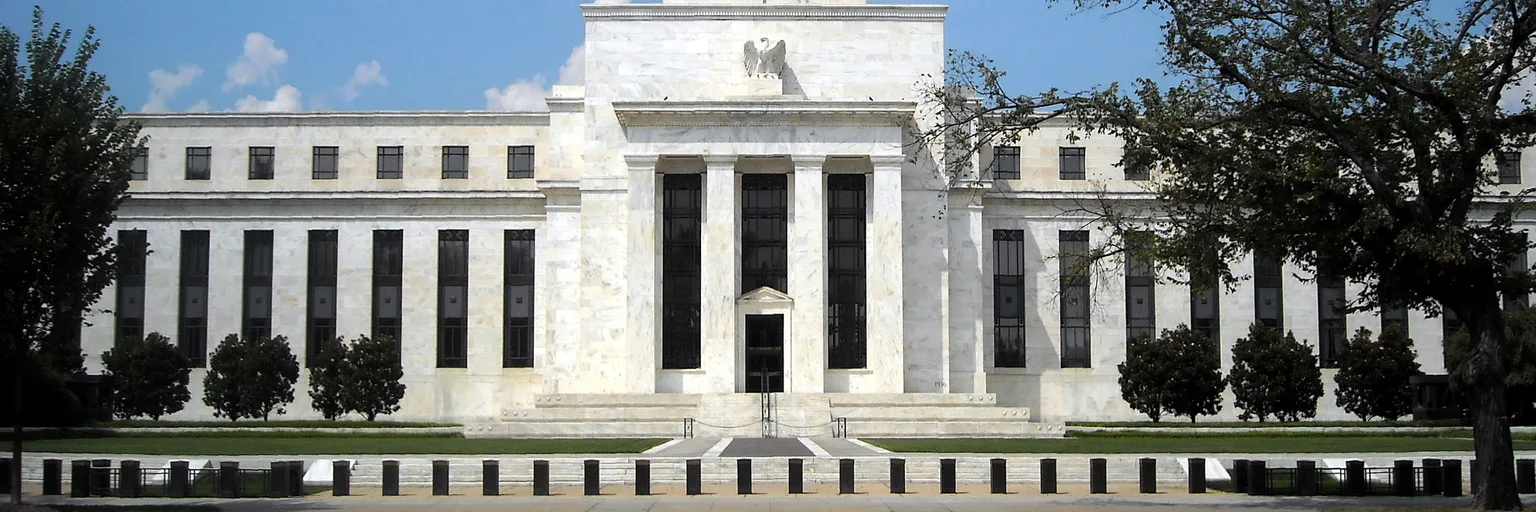
Photo: AgnosticPreachersKid / Wikimedia Commons (CC BY-SA 3.0)
Who wants a roaring economy if it means the Fed never gets to ease up? That is the uncomfortable question behind Thursday's data. The usual reflex says strong growth is good news. In an economy where inflation has overshot for years, we think it is closer to a warning label.
The facts are simple. The U.S. economy grew 3.4% annualized in the third quarter, beating the 3.2% forecast, up from 2.2% in the second quarter. At the same time, PCE inflation, the Fed's preferred gauge, rose to 3.6% in the 12 months to September, from 3.4% in August. A day earlier, the Fed held its range at 3.75% to 4% in a 10-2 vote, with two officials, Lisa Cook and Beth Hammack, voting for a quarter-point increase.
The debate has moved from "when do they cut?" to "do they hike again?"
The question is no longer how long until relief. Rate cuts are barely in the conversation. The Fed already raised rates in September, its first increase since 2023, and Investors Business Daily's live coverage puts market odds of a 25-basis-point hike at the December 9 meeting at 83%. Another outlet, investingLive, had it at roughly 84% before the data.
Seen through that lens, a 3.4% GDP print is not a surprise in the market's direction. It is another brick in a wall that was already built. Strong consumer spending and investment mean demand isn't cooling on its own, so in our view the Fed has less reason to believe its current rate is restrictive enough. A central bank that wants demand to slow doesn't get to celebrate when demand doesn't.
Don't blame growth alone: energy is doing a lot of the work
Here is where we'd push back on a purely "good news is bad news" reading. The inflation story has a big energy component. September consumer prices rose 3.7% from a year earlier, and IBTimes reports that energy was up 5.2% on the month and gasoline 9.1%. Chair Kevin Warsh himself warned that higher energy prices could complicate the Fed's effort.
There is also a genuinely mixed signal in the GDP report. As Kitco notes, the advance Q3 core PCE rose 2.5%, slightly above the 2.4% expected but well below the 3.3% of the second quarter, and the GDP price index came in at 2.2% against a 3.2% forecast. That isn't the profile of an economy spinning out of control. It looks closer to an economy where the shock is concentrated in fuel, and the Fed is worried it spreads.
That worry is the whole game. If energy-driven increases seep into wages and expectations, the Fed would face a harder job. The 10-year Treasury yield settling around 5.02% on a rise in the break-even inflation rate suggests bond investors are not dismissing that risk. Our reading: strong growth doesn't cause the Fed's problem, but it removes the cushion that might have let it look past it.
Plan for rates that stay high, not for a rescue
We can't tell you what to buy, and forecasts are only that. But the planning logic is hard to avoid: build your plan around today's rates lasting, not a rescue arriving.
For savers, higher-for-longer is not all bad. A CD Valet press release (a marketplace with an obvious interest in selling CDs, so read it with that in mind) says the median CD rate rose to 3.30% and more than 7,200 rates offer at least 4.00% APY. Its best 24-month CDs reach 4.50%. The takeaway we'd keep, whoever is selling it: CD rates don't move in lockstep with the Fed, so comparing offers matters more than guessing the next meeting.
For borrowers and stock investors, the picture is less friendly. As the Hawaii Tribune-Herald notes, rising government borrowing costs make mortgages, consumer loans and corporate financing more expensive, and certain AI companies that issued a lot of debt to fund expansion appear particularly exposed. We'd be wary of any valuation that quietly assumes borrowing costs fall soon.
The verdict: ignore the headline cheer. A hot GDP print and a 3.6% PCE reading are not a contradiction; together they are the reason the Fed can't relax. Markets could be wrong, and a softer inflation report could shake the December hike pricing, as investingLive pointed out. But betting your budget on relief is the weakest position available. Plan for rates that stay high, and treat any cut as a bonus rather than a plan.
No topics yet: start the first one.
More stories
Colombia's Rescue Law is no simple VAT grab, but savers should still read it
Bogotá's bill would widen VAT, trim spending and raise health contributions. Who really pays is unsettled, and investors in Colombian assets should watch Congress.

Emerging-market yields look generous until the currency sends the bill
Central banks from Manila to Kyiv are raising rates as inflation bites, and the peso's slide shows the risk. Savers chasing high local yields should treat exchange-rate risk as part of the return.

US debt at 100% of GDP is a slow bill, not a doomsday date
Federal debt has reached the size of the US economy. The risk isn't a crash day but long-term yields near 5% that could quietly raise what everyone pays to borrow.

A 3.4% GDP print isn't a green light: the Fed is thinking hikes, not cuts
US growth hit 3.4% while the Fed's favorite inflation gauge accelerated. The debate has moved past when cuts come to whether another hike is needed.