Fewer Fed meetings won't mean fewer shocks, just bigger ones
Cutting rate votes to seven in 2027 and six in 2028 won't calm markets. Fewer decision dates likely means each one carries more weight, and investors should plan for that.
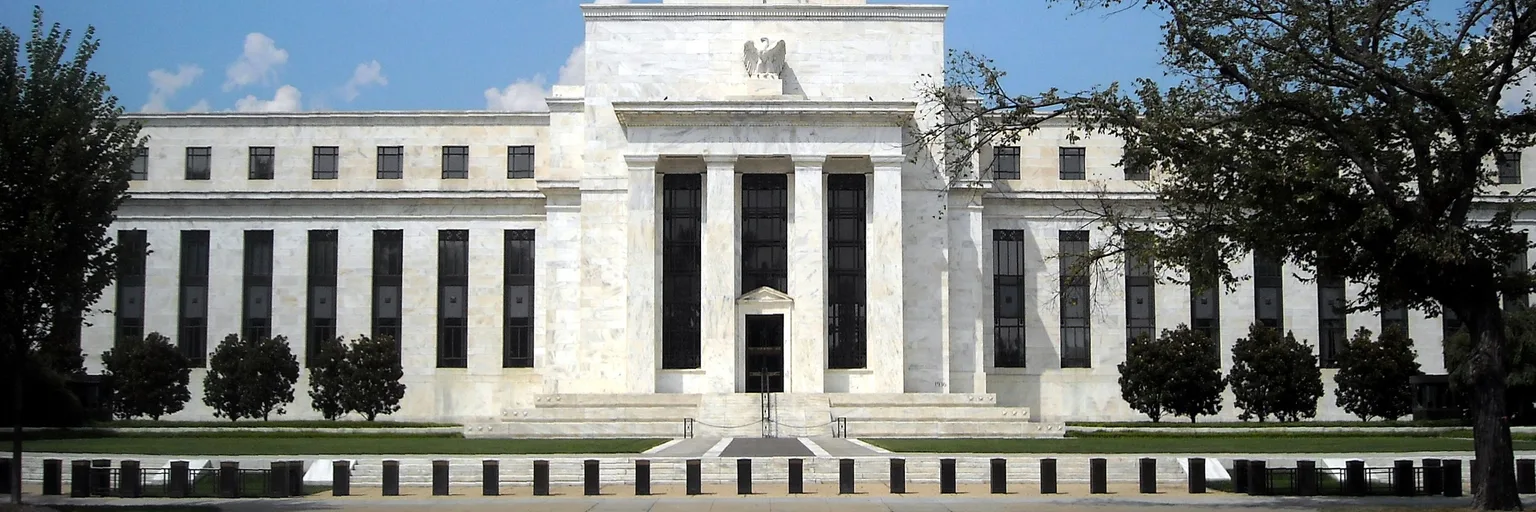
Photo: AgnosticPreachersKid / Wikimedia Commons (CC BY-SA 3.0)
Does a central bank that decides less often create less drama? Intuition says yes. We think the opposite is more likely: when the calendar thins out, every date left on it gets heavier.
On Wednesday the Federal Reserve held rates at 3.75% to 4%, after raising them in September for the first time since July 2023. As 20minutos reports, the vote was 10 to 2, with Lisa Cook and Beth Hammack preferring a 25-basis-point hike. September inflation came in at 3.7%, up from 3.4% in August.
The bigger news came at the press conference. Chair Kevin Warsh said the Fed will keep eight meetings a year, but the New York Times notes it will vote on rates seven times in 2027 and six in 2028. The freed-up sessions will go to broad strategy discussions. According to RTVE, the 2027 strategy meeting will have no rate vote and no official statement.
Fewer dates concentrate the risk
The economy doesn't read the Fed's calendar. Oil near $100 a barrel, a war-driven energy shock and a jobs report that fell from 133,000 in August to 29,000 in September will keep arriving on their own schedule. If the Fed acts less often, the information that piles up between votes has to be absorbed at fewer moments.
That's our reading, not a documented outcome, but the logic is simple. Each decision becomes a larger event, and the market has more reasons to bet hard on what comes next. We'd expect more of the repricing to be crammed into the days around the vote itself.
There is a second effect we'd watch. A smaller set of dates also becomes a bigger focal point for positioning. Funds, traders and ordinary savers all end up staring at the same few days. Again, that is our expectation, not something the Fed has said or the data has shown yet.
Silence is not stability
The pitch for the change, as we read it, is more time to think and less reaction to every data point. That may be a fair goal. Still, look at this week. The market priced a hike in December at about 90%, according to RTVE, and Warsh declined to share his thinking on what will happen at that meeting, saying he doesn't believe in prejudging what the Committee will do. That is a defensible stance. It also means investors are left to guess more, not less.
Pair that with a meeting that has no statement at all, and the Fed is giving the market fewer official signals just as inflation is the main question. Traders will probably fill the gap with speeches, leaks and interpretation. In our view that is a recipe for more narrative-driven swings, not fewer.
What a sensible investor does with this
None of this is advice, and nothing here says markets will fall. The point is narrower: don't read a thinner calendar as a calmer one. Reasonable habits follow from that.
- Treat each remaining decision date as a possible big mover rather than a routine event.
- Avoid portfolios that only work if rates stay predictable between meetings.
- Keep an eye on inflation and energy data, which will keep moving the odds in the gaps.
In our view, the losers from this change are the investors who treat the Fed calendar as a metronome and assume surprises will shrink along with the number of meetings. The winners, if there are any, will be those who accept that uncertainty doesn't disappear when meetings do, and who build their plans around that.
The change doesn't start until 2027, and the December meeting comes first. The new schedule is also a design choice that can be tested, and we'll see in practice whether it reduces noise. Our bet is that it relocates the noise instead. Plan for bigger moves per decision, not for quiet.
No topics yet: start the first one.
More stories
Colombia's Rescue Law is no simple VAT grab, but savers should still read it
Bogotá's bill would widen VAT, trim spending and raise health contributions. Who really pays is unsettled, and investors in Colombian assets should watch Congress.

Emerging-market yields look generous until the currency sends the bill
Central banks from Manila to Kyiv are raising rates as inflation bites, and the peso's slide shows the risk. Savers chasing high local yields should treat exchange-rate risk as part of the return.

US debt at 100% of GDP is a slow bill, not a doomsday date
Federal debt has reached the size of the US economy. The risk isn't a crash day but long-term yields near 5% that could quietly raise what everyone pays to borrow.

Strong GDP isn't good news for rate relief: markets are betting on a Fed hike
A 3.4% growth print and 3.6% PCE inflation leave the Fed with little reason to ease; the market is betting on a December hike, not a cut.