One ugly Friday is a good reason to check what your index fund holds
The Nasdaq's 747-point slide, driven by AI worries and an Intel plunge, is a reminder that "diversified" index funds can hide big bets on a few names. Check before you react.
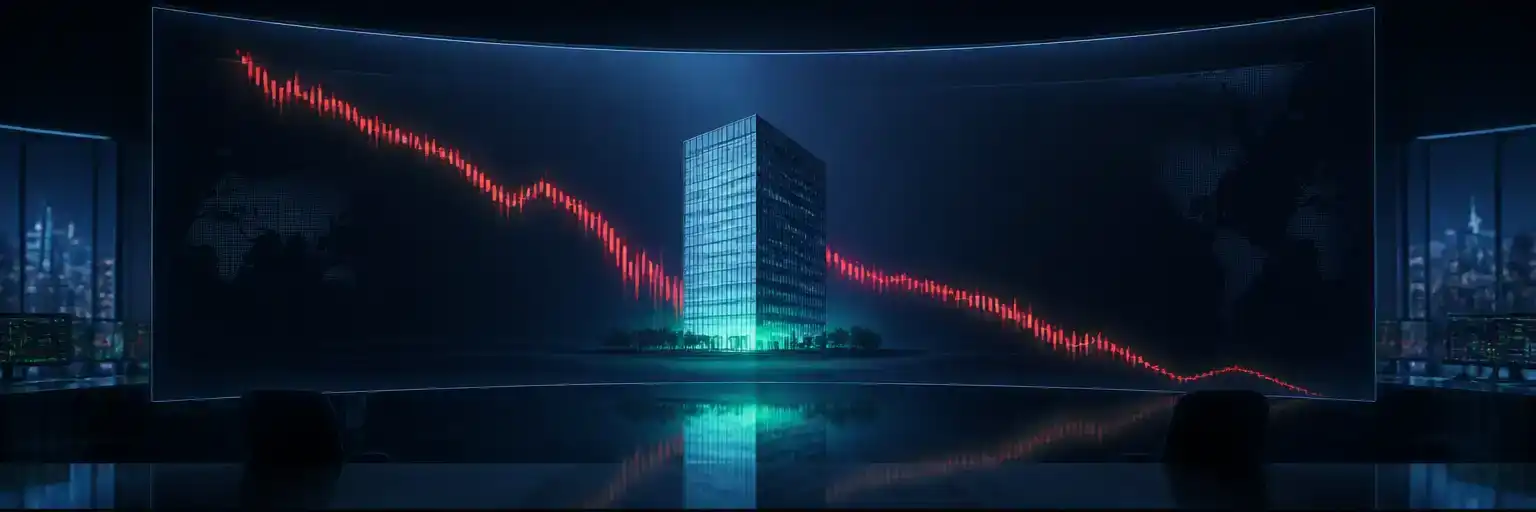
AI-generated image
Is your index fund really diversified, or is it a concentrated bet on a few tech giants wearing a sensible suit? Friday's selloff is a decent moment to ask, because it is the kind of day that reveals what you actually own.
Here is what happened. As Kiplinger reports, the Nasdaq Composite fell 2.9% to 25,437, its steepest one-day drop since March 2025. The S&P 500 lost 1.8% and the Dow 1.1%. Intel dropped 28.6% after weak guidance, and other chip stocks fell too: AMD 10.9% and Nvidia 4.2%. Behind it all, Kiplinger notes, were growing worries about AI spending and whether it will pay off.
The month was also rough for the tech-heavy index. According to Yahoo Finance, the Nasdaq fell 5.2% in October, its worst month since March 2025, while the Dow gained 1.5%.
The Dow's gain and the Nasdaq's loss may be the same story
Look at the October scoreboard again: Dow up 1.5%, S&P 500 down 1.2%, Nasdaq down 5.2%. Three "the market" numbers, three different months. In our view the gap is not noise. It probably reflects how much of the S&P 500 and the Nasdaq rides on the same cluster of mega-cap and AI-linked companies, while the Dow, with its different mix, held up.
Money did not vanish from the market so much as rotate. Kiplinger describes investors moving toward energy, consumer staples, healthcare and Treasury bonds. We think that is the real lesson: if your whole portfolio is one broad US index fund, you may be making a large, mostly unspoken call on a single theme, and Friday just sent you the invoice for it.
We can't tell you what share of your fund sits in these names. That depends on the fund, and nothing in our documentation covers it. But checking takes five minutes: open the fund's top-ten holdings list and add up the weights.
One company's miss can echo through everything
Intel's guidance was ugly: it expects fourth-quarter earnings of 25 cents per share, against Wall Street's forecast of 45 cents. That is a company-specific problem. Yet the pain spread to other semiconductor names. This is what concentration can look like in practice: a disappointment in one corner of an industry becomes a headline for the whole index.
It also doesn't help that the macro backdrop is jumpy. Kitco reports the Fed held rates at 3.75% to 4.00% this week with two dissents in favor of a hike, and Kiplinger cites WTI crude at $104.45. A market worried about AI returns and financing costs is not a calm place to find out you were more exposed than you thought.
We would be careful with the drama, though. One bad session, even a steep one, is not a verdict on AI or on indexing. Kiplinger itself quotes LPL's Adam Turnquist saying the Magnificent 7 are showing signs of technical weakness, and that more deterioration from here would suggest leadership "is rotating away from mega-cap stocks." Note the conditional. That is a forecast, not a fact, and forecasts about rotations have a poor habit of arriving late or not at all.
What to do: audit, don't react
Who loses from a day like this? Anyone who bought a broad fund believing it was a shield and then sold in a panic, locking in a loss. Who wins? People who looked at their holdings before the storm and decided on purpose how much tech they wanted.
Our suggestion, which is general and not personal advice, since we don't know your goals, timeline or country's tax rules:
- Check your top holdings and see how many are the same AI-exposed names across several funds you own.
- Decide whether that exposure matches your time horizon. Money you need soon shouldn't depend on a theme that can drop 5% in a month.
- If it's too much, adjust gradually and by plan, not on the day the screen is red.
The verdict: Friday was not a reason to flee the market, but it was a very good reason to read the label on your fund. Diversification is something you verify, not something you assume because the fund has "500" or "broad" in the name.
No topics yet: start the first one.
More stories
When stocks and bonds trade the same AI story, check your hedge
Tech fell, Treasuries rallied and oil hit six-month highs on the same day. The market is pricing AI cash burn, not just rates, so check what your bonds really do for you.

Gold is trading on interest rates, not fear, and savers should know it
With a war, spiking oil and falling yields, gold still hit a one-year low. It is trading on rate expectations, so savers who bought it as insurance should check what they own.
Intel's 29% crash shows an earnings beat no longer buys forgiveness
Intel beat on profit and still suffered its worst day in decades, while Amazon missed. The lesson for index-fund owners is how much one AI narrative is carrying.

Alphabet's $500 billion wipeout is the market asking AI for receipts
Wall Street didn't reject AI this week. It rejected spending that arrives long before the profits do, and index-fund holders are more exposed to that than they think.