Invesfera Newsroom
Car loans are the canary: captive finance arms only cushion the blow
Higher rates raise lease costs for every brand, and a captive bank like Renault's softens the hit. US subprime car credit shows how thin household cushions are.
Higher rates raise lease costs for every brand, and a captive bank like Renault's softens the hit. US subprime car credit shows how thin household cushions are.
A quarter-point hike is mostly priced in. The sensible response is a check on bond duration, cash yield and leverage, not a portfolio overhaul driven by a headline.
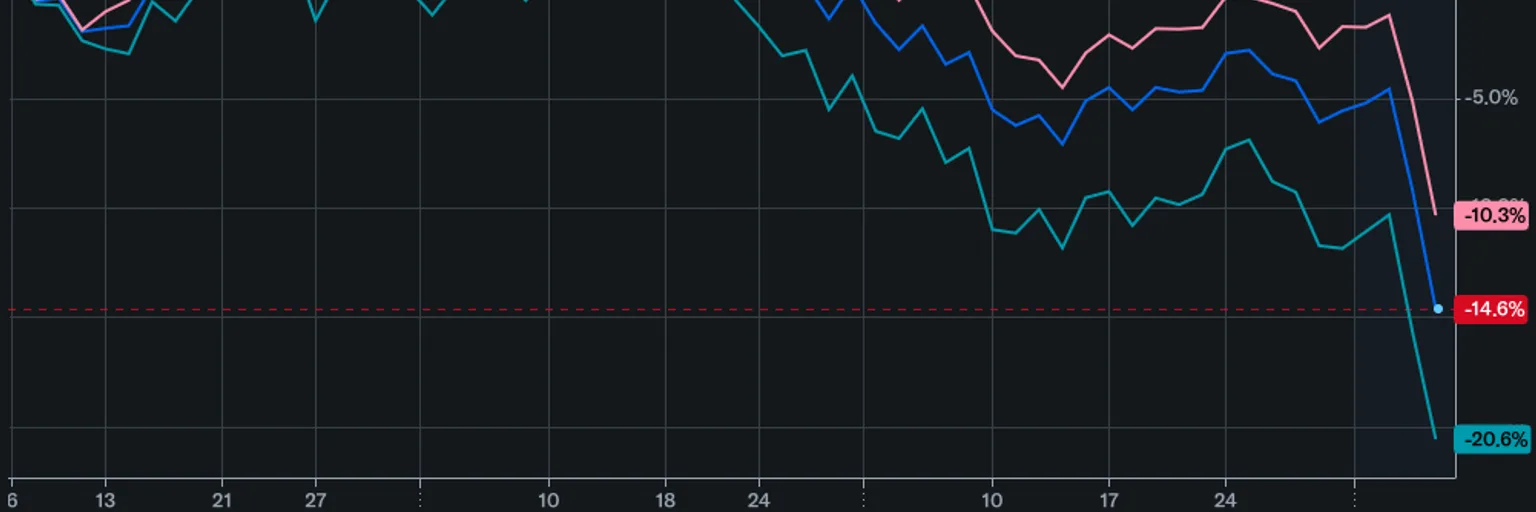
A one-day chip rout erased the post-election rally, and the lesson isn't about Democrats or Republicans: it's about how much of your portfolio rides on one AI trade.
Oil fell on a political bet about Iran, not on new barrels or reopened flows. Treat it as a cushion for inflation expectations, not a signal to chase energy or cyclicals.
With eurozone inflation at 4% on energy, markets are right to price a December hike. The smarter question is whether it's the last, and what that means for your money.
Wall Street is cheering Trump's pledge to accept the results and a Democratic Congress, but relief trades fade fast. Earnings, rates and tariffs matter more.
Democrats took both chambers and markets answered with sector tilts, not a rout. The real signal is in yields and fiscal fights, not in a portfolio overhaul.
Alstom's backlog looks defensive on paper, but a second profit warning and a €1.2 billion first-half cash burn show why cash proof must come before the "safe" label.
The AI selloff is really about cash burn, not central banks, but companies that borrow to keep building are the most exposed if money gets pricier. Stress-test your portfolio.
A quarter-point hike is a headline, but the 2.3 million UK households coming off fixed deals in 2027 are the real bill, so building a payment buffer now makes sense.
Seven straight monthly falls and a likely fifth RBA hike are a live demonstration that rate-driven corrections are real, and a reminder for borrowers everywhere to test their own loans.
Monday's open will likely be loud, but the useful question is whether AI spending can pay for itself. Free cash flow, not the headline index move, is what to watch this week.
With US interest costs above $1 trillion, the Fed's mixed signals may be less about confusion and more about debt management. Savers should plan accordingly.
When the state buys stocks to stop a slide, it can calm a panic. It also tells you officials are worried, and that is no reason to treat Chinese equities as protected.
By freezing December targets while Brent sits near $118, OPEC+ lets high prices do the work. Investors should read energy as an inflation input, not a safe harbor.
The A+ rating survived, but the negative outlook and a 10-year yield near 5% are the real story: France's funding cost is what savers should watch, not the verdict.
The day AI capex flattens is the real test for stocks. In our view, the defensive rotation already under way is less independent of AI than it looks.
The FBI blames North Korea for a $6 billion theft at Binance. Users may be made whole this time, but that doesn't make leaving your coins on an exchange a strategy.
Seasonal patterns say the best stretch for stocks starts now. But base rates ignore concentration, valuation and today's yields, and steady contributions beat guessing the bounce.
Midterm headlines will be loud on November 3, but the evidence suggests that Treasury yields, deficits and earnings matter more to your portfolio than who wins.