Beijing's market rescue is a smoke alarm, not a safety net
When the state buys stocks to stop a slide, it can calm a panic. It also tells you officials are worried, and that is no reason to treat Chinese equities as protected.
Photo: Quintin Soloviev / Wikimedia Commons (CC BY 4.0)
If the government is buying your stocks, should you feel safer? Usually the answer is the opposite. A rescue is what you see after officials have decided the market is too sick to be left alone.
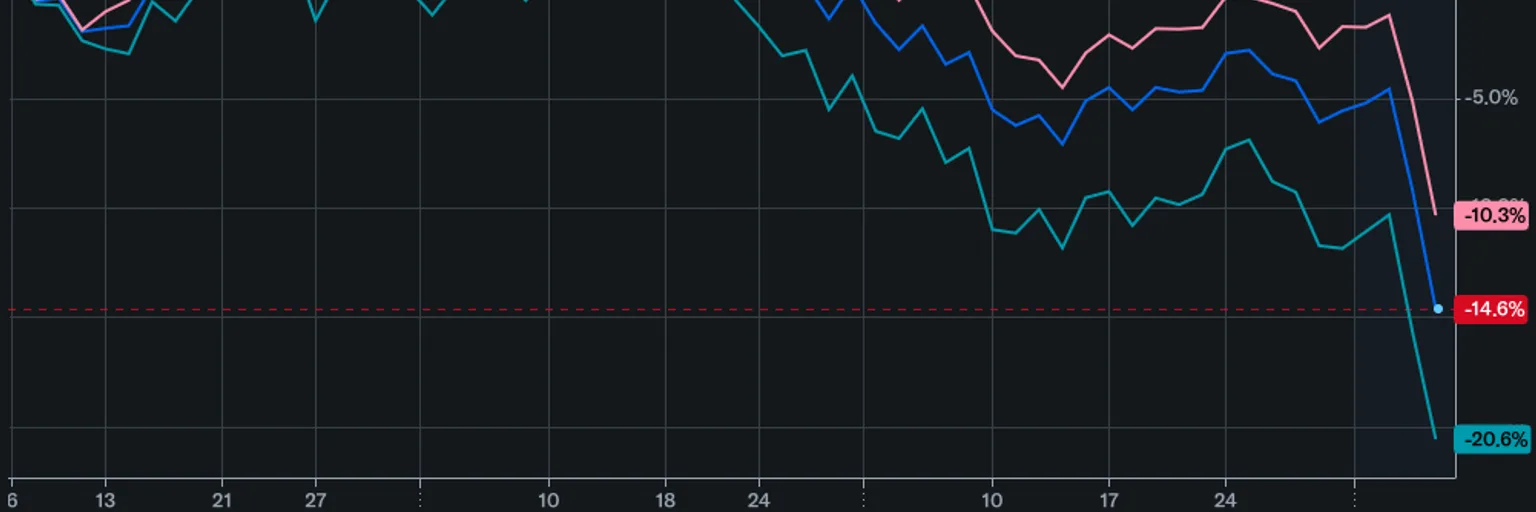
That is how we read the latest news from China. As Bloomberg reported, via ZeroHedge, local outlets say the central bank, securities regulators and some brokers and funds will meet Monday. The topic is how to boost a relending program that finances share buybacks and stake increases. The backdrop is ugly. The CSI 300 fell 8.5% in October, its steepest monthly drop since early 2016. It also dropped for a record 12 straight weeks and slid into a bear market.
State-linked money has already moved in. Goldman Sachs noted that "national team" buying of nine favored ETFs reached RMB84bn ($12.6bn) in turnover. October's official purchasing managers' indexes, meanwhile, slipped back into contraction.
A put from the state changes the speed of the fall, not the direction
Plunge protection works at one thing: it stops disorderly selling. A buyer that doesn't care about price can absorb panic on the worst days. That is real, and nobody should dismiss it.
But the support is aimed at the symptom. The investinglive explainer makes the point that the bigger risk for investors is policy signaling: intervention can mean officials are uncomfortable with the speed, the direction, or both. We think that's the right lens. A fire brigade at the door doesn't tell you the building is safe. It tells you something was burning.
There is also a practical limit. Bloomberg Intelligence says the national team may need to accelerate purchases, and that state buying alone may not be enough. That sounds to us like an open-ended bill. If the buyer has to keep showing up bigger each time, the price it is defending isn't a floor. It is a moving target.
The problem is profits, and you can't decree those
The most telling number isn't the index drop. According to Business Standard, citing Bloomberg data, China's market has lost $3.5 trillion in value since a May peak, and the headline calls sinking profits a deeper trap. Buybacks and ETF purchases can support prices. They cannot create earnings.
Here the rescue also has an unusual target. ZeroHedge argues that what Beijing is propping up this time is the AI trade. We'd treat that as their framing rather than settled fact. Still, it fits a global picture: Yahoo Finance calculated that the biggest AI and chip stocks have shed about $5 trillion in market value since Oct. 6. If the theme is unwinding everywhere, a state can slow the descent at home, but it can't repeal the repricing.
Our opinion: the "government put" is overrated as a reason to buy. A put protects you at a known strike price, with a counterparty obliged to pay. Nothing in the reporting we've seen names a level, an amount or a duration. The buyer may stop when policy priorities change, or when the cost grows. That is hope, not insurance.
Don't make the rescue your investment thesis
None of this means Chinese stocks can't rise from here. State buying can produce sharp rallies, and short-term traders may well try to ride them. Nor does it mean the market is doomed. It means the support shouldn't be your thesis.
A few practical takeaways, none of which is personal advice:
- Judge a rebound by earnings and activity data, not by who is buying. If profits and the PMIs stabilize, the case improves on its own merits.
- Treat each announcement as information about stress. A bigger or more creative rescue tool is, in our view, a sign the problem is bigger, not smaller.
- Remember that a rally driven by state funds can fade when they step back, because the natural buyers may not have arrived.
Semafor's line that China's casino-like markets have always been a poor barometer of the economy's health cuts both ways. Prices are a weak signal, but the decision to intervene is a strong one. In our view, a government that convenes a meeting like this is rarely relaxed about its market.
Our verdict: read Monday's reported meeting as a smoke alarm. It may well quiet the room for a few days. But the right response to an alarm isn't to buy the building. It is to ask what is burning, and to wait until the answer shows up in profits rather than in rescue headlines.
No topics yet: start the first one.
More stories
OPEC+ standing still isn't passivity: with oil near $118, restraint is a strategy
By freezing December targets while Brent sits near $118, OPEC+ lets high prices do the work. Investors should read energy as an inflation input, not a safe harbor.

Fitch didn't downgrade France, and that's not the comfort it seems
The A+ rating survived, but the negative outlook and a 10-year yield near 5% are the real story: France's funding cost is what savers should watch, not the verdict.

Markets are priced for endless AI spending, and pharma can't catch the fall
The day AI capex flattens is the real test for stocks. In our view, the defensive rotation already under way is less independent of AI than it looks.

"History says buy" is a weak argument after AI's $5 trillion rout
Seasonal patterns say the best stretch for stocks starts now. But base rates ignore concentration, valuation and today's yields, and steady contributions beat guessing the bounce.